The fastest way to waste money on an RS3 is to buy parts in the wrong order. The 2.5TFSI responds incredibly well to modifications, but the best results come from a plan, not a cart full of random upgrades. This Audi RS3 upgrade guide is built for owners who care about real performance, clean fitment, and reliability that matches the power.
The RS3 is one of the strongest modern Audi platforms because it delivers serious gains without needing to open the engine on day one. That also means the market is crowded with options that look similar on paper but serve very different goals. A street car on pump gas needs a different recipe than a drag-oriented ethanol setup or a road course build that lives at high temps for long sessions.
Start with your actual goal
Before you choose hardware, decide what the car needs to do well. If your priority is a sharper daily driver with better sound and stronger midrange, your upgrade path should stay simple. If you want repeatable quarter-mile performance, fueling and traction move up the list fast. If the car sees track days, cooling and brakes matter just as much as horsepower.
That sounds obvious, but this is where most RS3 builds go sideways. Owners chase a dyno number, then end up fixing heat soak, wheel hop, or fuel limitations after the fact. A strong build is balanced. Power only feels premium when the rest of the car can support it.
Audi RS3 upgrade guide: build in stages
The cleanest way to approach the platform is by stages. Not because every car has to follow a marketing label, but because the RS3 has clear choke points. Airflow, charge temperatures, fueling capacity, and driveline control all become more important as boost and torque increase.
Stage 1: software, intake, and exhaust basics
For many owners, a tune is the best first step. The DAZA and DNWA 2.5TFSI engines respond hard to calibration changes, and even a conservative setup can transform the car. Throttle response sharpens, torque comes in earlier, and the RS3 starts to feel like the engine Audi should have shipped from the factory.
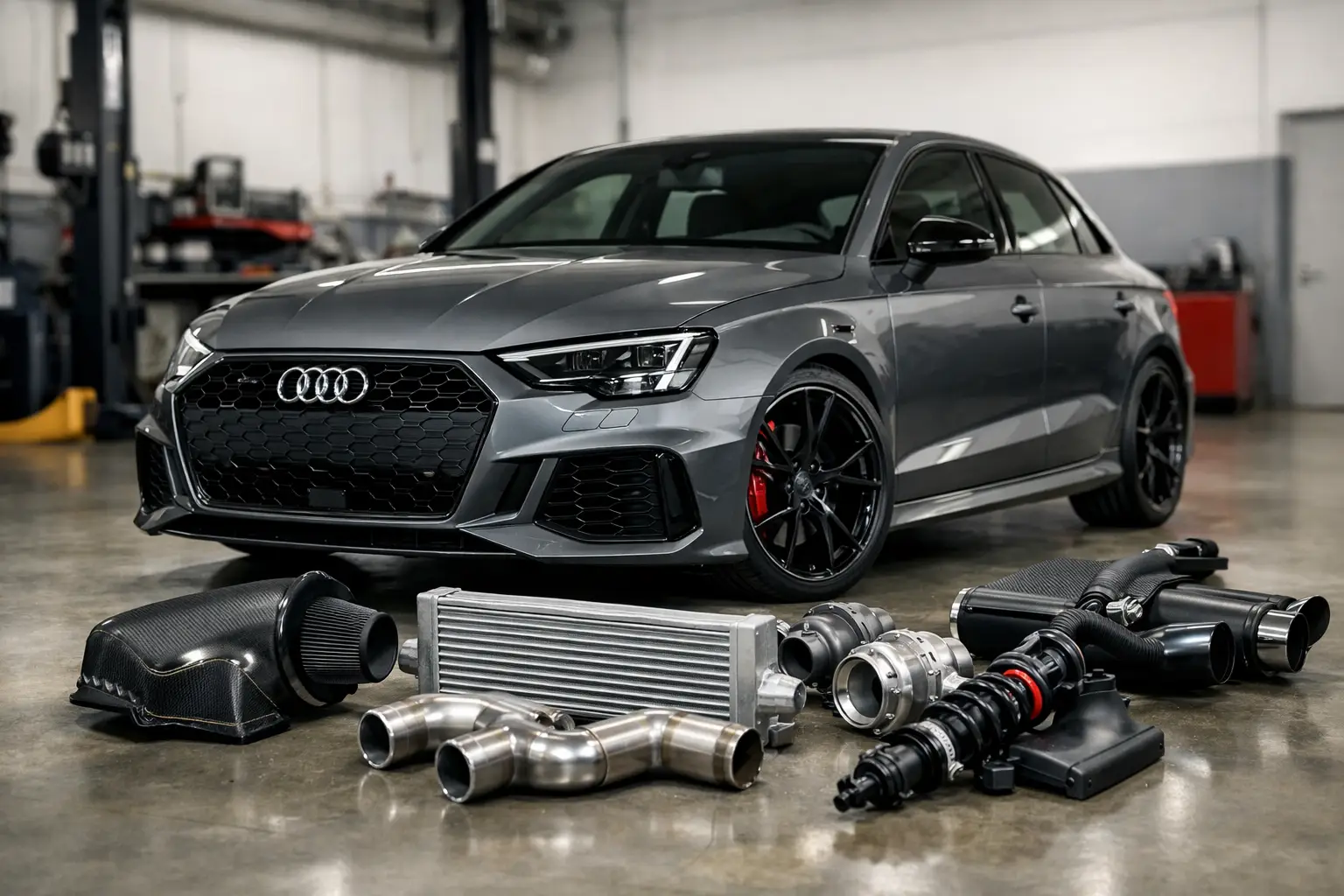
At this level, an intake and a freer-flowing inlet can help support the tune while improving sound. You are not buying huge peak gains from hardware alone, but you are reducing restriction and preparing the car for later upgrades. The same goes for a quality mid-pipe or cat-back. Expect more character and some improvement in flow, but choose based on your tolerance for volume and drone. The best exhaust for a weekend toy may be annoying on a long highway drive.
A turbo inlet, panel filter, or full intake can all make sense here depending on your long-term plan. If you know you are going further, buy parts once and buy correctly.
Stage 2: intercooler and supporting airflow
This is where many RS3 owners start to see the difference between one good pull and repeatable performance. The factory cooling system becomes a limitation quickly, especially in warmer climates or during back-to-back runs. An upgraded intercooler is one of the smartest investments on the platform because it protects consistency, not just peak power.
Lower charge temps help the tune stay aggressive and keep the car feeling strong after the first hit. If you are on pump gas, that matters even more. A bigger intercooler, paired with improved inlet-side airflow, gives the turbo and engine a more stable environment to work in.
This is also the point where the quality of the part matters. Core design, end tank design, pressure drop, and fitment are not minor details. A cheap intercooler that creates new restrictions or poor mounting headaches is not a value part.
Stage 3: fueling and ethanol considerations
The RS3 gets very serious when you start adding fuel. Ethanol blends can produce excellent power and knock resistance, but they also expose the limits of the stock fuel system fast. If your goal is a meaningful jump beyond basic bolt-ons, fueling is not optional.
On the 2.5TFSI, that usually means looking at higher-capacity injectors, upgraded low-pressure fuel system components, and in more aggressive setups, complete fueling packages designed around your power target. This is where compatibility matters most. Fueling upgrades need to match the tune, the turbo setup, and the fuel you actually plan to run.
There is a trade-off here. Ethanol can deliver outstanding performance, but availability is inconsistent depending on where you live. If the car is a daily driver and you do not have reliable access to quality ethanol, a strong pump gas build may be the better choice. The right setup is the one you can use consistently.
Turbo upgrades: when the stock unit stops making sense
The factory turbo can go farther than many people expect, especially with supporting bolt-ons and the right calibration. For plenty of street builds, it offers more than enough performance without giving up drivability. Once you want more top-end power, stronger trap speed, or a setup built around ethanol and aggressive fueling, an upgraded turbo becomes the logical step.
This is where honest planning matters. A larger turbo does not just mean more power. It changes the character of the car. Some setups preserve quick response well, while others trade low-end immediacy for bigger numbers up top. Neither is wrong, but they suit different drivers.
If you are stepping into a bigger turbo, make sure the car has the supporting hardware first. Intercooling, intake-side flow, exhaust flow, fueling, and calibration all need to be aligned. Turbo upgrades are expensive when done twice.
Don’t ignore the transmission and mounts
The RS3’s dual-clutch transmission is a major part of why the platform is so effective, but once torque climbs, TCU tuning becomes more important. A proper transmission calibration can improve shift strategy, clutch behavior, and launch performance while helping the driveline handle the added load more confidently.
Engine and transmission mounts are not glamorous purchases, but they make a noticeable difference. Better mounts reduce movement under load, improve shift feel, and help put power down more cleanly. The trade-off is added NVH. For a street-focused car, the right mount setup is usually the one that tightens the driveline without making every cold start feel like a race car compromise.
Audi RS3 upgrade guide for braking and chassis control
A faster RS3 needs better control, not just more engine output. The stock car is already quick enough to expose its own weaknesses in braking confidence and chassis composure once speeds rise.
Brakes that match the power
If the car sees hard street driving, mountain roads, or track work, brake upgrades deserve attention early. Pads, fluid, and stainless lines can transform braking feel without jumping straight to a big brake kit. For many owners, that is the best value move.
A full brake kit makes more sense when heat capacity and repeatability become the issue. That usually shows up on track or in repeated high-speed use, not during a single highway pull. Again, it depends on how the car is used.
Suspension and wheel setup
The RS3 responds well to suspension tuning, but not every owner wants the same thing. Springs can improve stance and sharpen response, though ride quality may suffer if damping is not matched well. Coilovers offer more control and adjustability, but they need proper setup to justify the cost.
Wheel and tire choice may do more for usable performance than another small engine mod. A quality tire changes launch consistency, braking, and front-end bite immediately. If your current setup struggles for grip, fix that before chasing another 30 horsepower.
Reliability is not separate from performance
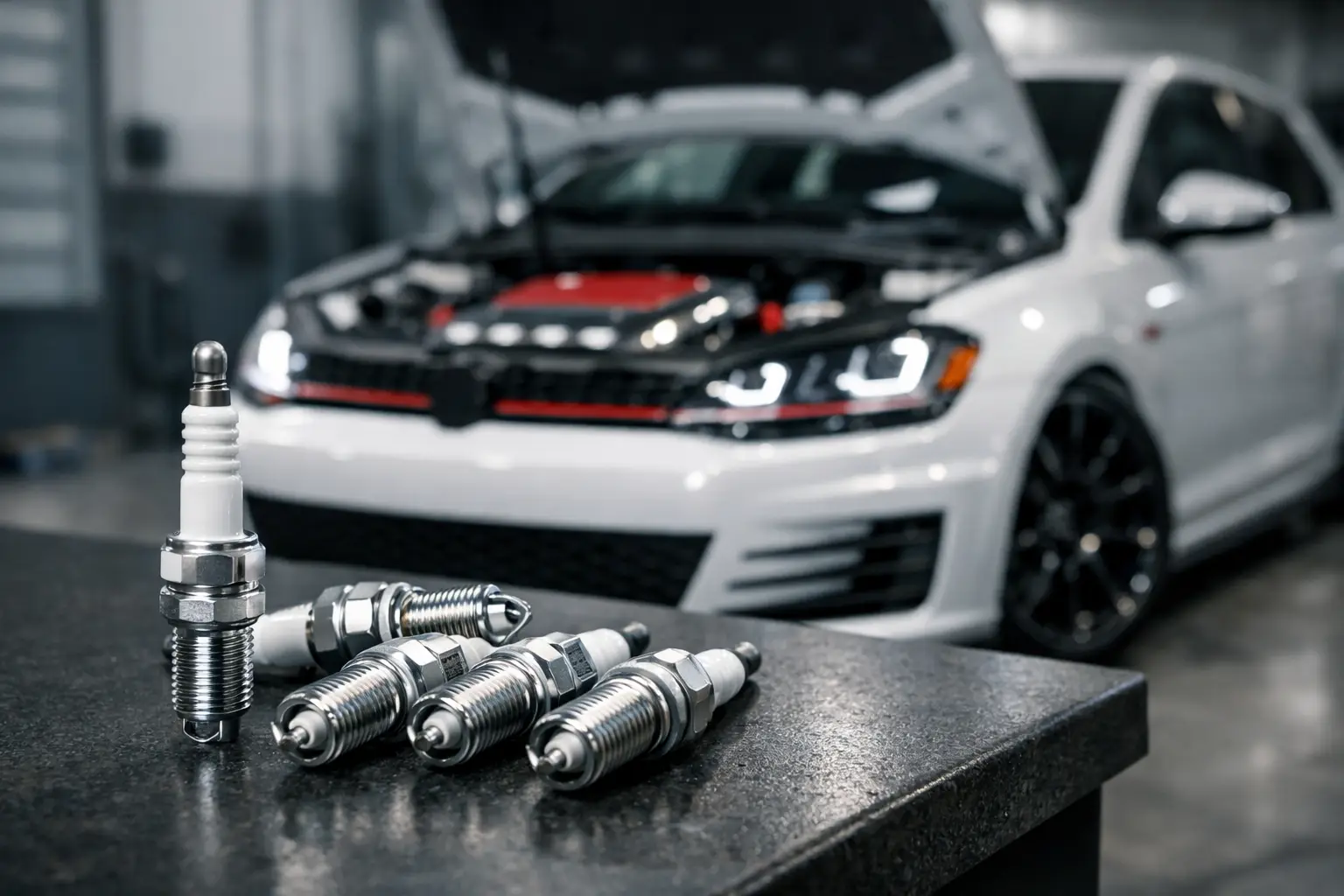
The best RS3 builds are fast because they are well supported, not because they gamble on the limit. Spark plugs, ignition health, fluid condition, and cooling system performance all matter more as power climbs. Maintenance stops being background work once you tune the car. It becomes part of the package.
That is especially true for owners who want repeatability. A car that runs one great number and then pulls timing all afternoon is not sorted. Reliable performance comes from choosing parts with a known reputation, confirming fitment against your exact platform, and building around a realistic goal instead of a headline figure.
This is where a specialist supplier earns its place. Shops and enthusiasts building serious European platforms need more than a big catalog. They need parts that make sense together.
How to buy the right parts the first time
An RS3 build should feel deliberate. Start with a target, choose the fuel, and decide whether the car is street-first, drag-focused, or road-course capable. Then work backward from the limitations that goal creates.
If you are keeping the stock turbo, prioritize tuning, intercooling, and supporting airflow. If you are pushing into ethanol and bigger power, move fueling and transmission strategy much earlier. If the car has track ambitions, treat brakes and cooling as core upgrades, not afterthoughts.
At EAS Store, that is the difference between selling parts and supporting a proper build. The right components should fit the platform, match the power level, and make the next step easier instead of forcing a do-over.
The RS3 rewards smart upgrades more than flashy ones. Build the car you will actually use, and it will be faster where it counts every time you drive it.