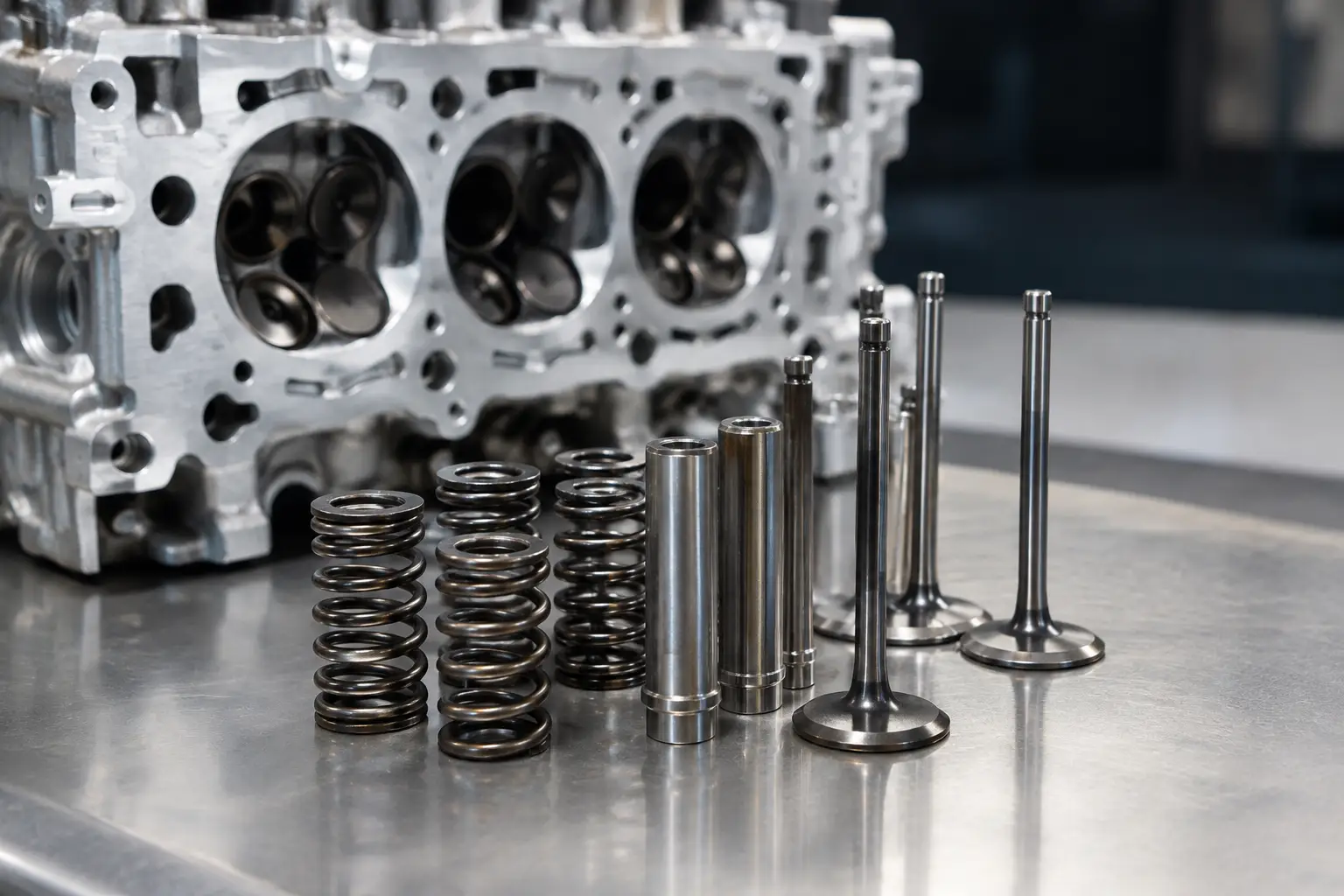
A valve spring is a small part with a large job. On an EA888 engine that sees elevated boost, aggressive camshaft profiles, or sustained high-RPM use, it is the component keeping the valve train under control while cylinder pressure and engine speed rise. This EA888 valve spring guide explains when an upgrade makes sense, what must match, and why choosing springs by horsepower alone is a mistake.
For many street-driven VW and Audi builds, factory valve springs remain entirely adequate. The decision changes when the engine’s operating range changes. A car that spends its life at a conservative factory rev limit has different needs than a track car making repeated high-RPM pulls or a built motor using aftermarket cams and a larger turbo.
What EA888 Valve Springs Actually Control
Valve springs close the intake and exhaust valves after the cam lobe opens them. Their job sounds simple, but the spring package has to maintain valve control through high engine speed, heat, boost pressure, and the inertia created by the valve, retainer, keeper, and camshaft motion.
When spring pressure is insufficient for the combination, the valve can lose contact with the cam’s intended motion. This is commonly called valve float. At speed, float is not just a power issue. It can cause unstable valve timing, misfires, reduced compression, contact between components, and serious engine damage in an interference engine.
More spring pressure is not automatically better. Excessive seat pressure increases load on the cam lobes, followers, retainers, and the rest of the valve train. It also adds friction and can shorten component life. The right EA888 valve spring setup supplies enough pressure to control the valves at the intended RPM and cam profile without adding unnecessary stress.
When Should You Upgrade EA888 Valve Springs?
A basic Stage 1 or Stage 2 calibration on a healthy EA888 engine generally does not mandate valve springs. Boost may be higher than stock, but a calibration that remains within a sensible factory-style RPM range is not the same as a dedicated high-revving build.
Spring upgrades become a serious consideration when you are pairing the engine with aftermarket camshafts, increasing the rev limiter beyond the stock operating range, running a larger turbo that carries power higher in the RPM band, or building for frequent road course, drag, or roll-racing use. High cylinder pressure can also increase the force acting against the valves, particularly on the exhaust side, so a high-boost build deserves a more complete valve-train review than a low-boost street tune.
The intended use matters as much as the dyno number. An EA888 making strong power for short street pulls may be comfortable on a different spring package than an engine making repeated hot laps at elevated RPM. A reliable build is specified around the worst conditions it will regularly see, not the easiest conditions it sees once.
Warning Signs Are Not a Buying Strategy
Misfires near redline, a sudden power falloff, or inconsistent high-RPM behavior can point to valve-control issues, but they can also come from spark, fueling, boost control, cam timing, or calibration problems. Do not install springs as a blind fix for a high-RPM misfire.
Start with proper diagnostics. Review logs, verify ignition and fuel supply, inspect cam timing data, and confirm the engine is mechanically healthy. If the combination is beyond the operating window of the original springs, an upgrade may be correct. If not, the underlying fault still needs to be found.
EA888 Generations and Fitment Are Critical
“EA888” covers multiple generations and a wide range of Volkswagen and Audi applications. Early Gen 1 and Gen 2 engines, Gen 3 transverse MQB engines, Gen 3 longitudinal applications, and newer Gen 4 variants do not automatically share the same valve-train components. Cylinder head design, valve dimensions, installed height, retainers, keepers, and camshaft profiles can differ.
That means a valve spring kit cannot be selected only by vehicle badge, displacement, or a generic 2.0T description. Confirm the exact engine code, model year, cylinder head application, and whether the engine remains stock internally or uses aftermarket valves, retainers, cams, or head machining.
The common compatibility mistakes are easy to avoid when the full build sheet is available. A spring may physically fit over a valve guide yet still be wrong because its installed height, retainer interface, or coil-bind clearance is unsuitable. Premium hardware is only premium when it fits the engine it is being asked to support.
Springs, Retainers, and Keepers Work as a System
A complete valve spring package may include springs, titanium or steel retainers, and matching keepers. These parts should be treated as a matched system unless the manufacturer specifically confirms compatibility with the existing hardware.
Retainer weight matters because lighter mass is easier for the spring to control at RPM. That does not mean titanium is mandatory for every EA888 build. It means the spring rate, retainer mass, valve mass, and target RPM all need to work together. For a street car with stock cams and a moderate limiter, a lighter retainer may offer little practical benefit. For a competition-oriented engine with aggressive cam acceleration, it can be part of the correct solution.
The Measurements That Separate a Good Build From a Guess
Valve spring selection requires more than a stated pressure figure. Seat pressure is measured with the valve closed at installed height. Open pressure is measured at full valve lift. Both figures matter, and neither tells the whole story without the camshaft specifications and installed height.
Coil bind is equally important. This is the point at which the spring compresses until its coils touch. The spring must retain a safe clearance from coil bind at maximum valve lift. A spring that binds can damage the camshaft, valves, retainers, or rocker and follower components almost immediately.
Installed height must be measured during assembly, not assumed from a catalog listing. Head work, valve jobs, replacement valves, retainers, and shims can all change the relationship. A reputable machine shop or experienced EA888 engine builder will verify installed height, seat pressure, open pressure, retainer-to-seal clearance, and coil-bind clearance before final assembly.
This is why valve springs are not an ideal shortcut for a first-time engine builder. The parts may be straightforward to buy, but the validation work determines whether they are safe at 7,000 RPM, 7,500 RPM, or beyond.
Match the Spring Package to the Rest of the Engine
The most dependable approach is to start with the camshaft manufacturer’s requirements. If you are using stock cams, select a spring package specifically engineered for the relevant EA888 cylinder head and your intended RPM range. If you are using aftermarket cams, follow the cam supplier’s required seat pressure, open pressure, maximum lift, and installed-height specifications.
Also consider the bottom end, turbo system, fuel system, and calibration. A higher rev limit should exist because the engine continues making useful, reliable power there, not because the hardware appears capable of spinning higher. On an EA888, the best shift point is often below the theoretical RPM limit, especially when turbo efficiency, fuel delivery, and cam timing stop supporting meaningful airflow.
For built engines, valve springs should be decided alongside forged internals, upgraded fueling, turbo selection, and the cylinder head plan. That prevents the familiar problem of buying parts twice after a build evolves from a strong street car into a high-output track or drag package.
Installation and Break-In Considerations
Valve spring replacement can sometimes be performed with the cylinder head on the engine using compressed air or a cylinder-support tool. That does not make it a casual installation. Losing a valve keeper, dropping a valve, damaging a seal, or mixing components can turn a planned upgrade into cylinder head removal.
Clean assembly practices and careful inspection are essential. Check valve stem condition, guides, seals, followers, cam lobes, and the existing retainers before adding performance springs. If the engine has significant mileage or evidence of valve-train wear, installing stronger springs without addressing the worn components can simply move the weak point elsewhere.
After assembly, the calibration should reflect the completed combination. Do not raise the limiter just because upgraded springs are installed. Verify oil pressure, cam timing performance, misfire data, and high-RPM behavior before using the car at full load.
The right spring package is not the stiffest one on the shelf. It is the one that matches your exact EA888, your camshaft, your target RPM, and the way the car will actually be driven. For builders balancing high boost with long-term valve-train control, EAS Store can help narrow the options before the parts order becomes an expensive compatibility lesson.