A downpipe can be one of the most effective exhaust upgrades on a turbo car, but it is also one of the easiest to buy wrong. If you are figuring out how to choose performance downpipe options for your VW, Audi, BMW, or Mercedes, the real question is not just which one flows more. It is which one fits your platform, matches your power goals, and makes sense for how you actually use the car.
That matters because not every build needs the most aggressive option on the market. A daily driven MQB GTI, a flex-fuel RS3, and a track-focused G8X S58 car all ask different things from the exhaust system. The right choice comes down to fitment, catalyst design, tuning requirements, materials, and the level of compromise you are willing to accept in sound, smell, and emissions compliance.
How to choose performance downpipe for your platform
Start with the one detail that causes the most expensive mistakes – exact vehicle fitment. You are not buying a universal performance part. You are buying for a specific chassis, engine code, turbo configuration, transmission layout, and often even a model year split.
On European platforms, those details matter more than many buyers expect. An Audi RS3 8V and 8Y may look similar on paper, but packaging and sensor placement can differ. BMW B58 and S58 applications can vary by generation and chassis. MQB fitment can also change depending on whether you are working with FWD, AWD, or a specific factory exhaust configuration.
If the downpipe does not match the exact application, everything after that gets harder. You can end up with poor alignment, check engine lights, clearance issues, or a part that physically bolts up but does not work properly with the rest of the system. Always verify chassis code, engine, turbo setup, and whether the part is designed for stock-location hardware or an upgraded turbo.
Stock turbo vs upgraded turbo matters
A stock-frame turbo setup usually needs a downpipe designed around factory mounting points and factory-style routing. Once you move to a hybrid or full-frame turbo, the flange, outlet size, and path can change significantly.
This is where buyers often overgeneralize. A downpipe that is perfect for a stage 2 street car may become a restriction on a higher-output setup. On the other hand, a race-oriented large-diameter downpipe built for a big turbo may be unnecessary on a mild build and can introduce fitment or sound issues you did not want.
Decide what you want from the upgrade
A performance downpipe usually gets attention because of horsepower gains, but that is only part of the decision. The right part should support the entire character of the build.
If your goal is faster spool, better top-end flow, and a stronger stage 2 setup, a high-quality catted downpipe is often the sweet spot for a street-driven car. It improves flow over the restrictive factory unit while keeping the car more civilized in sound and exhaust odor.
If your build is focused on maximum output and motorsport use, a catless downpipe may offer the least restriction. But there are trade-offs. You can expect a sharper exhaust note, more cabin smell, and in many cases a setup that is not legal for road use. For many owners, especially those with premium street cars, that is more compromise than benefit.
Catted vs catless is not just a power question
The catted versus catless debate gets oversimplified. Yes, catless designs can support aggressive power goals, but a well-designed high-flow catted downpipe can still perform very well on many modern turbo platforms.
The difference often comes down to your intended use. Street car owners usually care about drivability, tolerable sound, and fewer side effects. Track-only builders may prioritize outright flow and accept the downsides. If the car sees mixed use, the better answer is often a premium catted option from a reputable manufacturer rather than chasing the most extreme spec on paper.
Material quality and construction are worth paying for
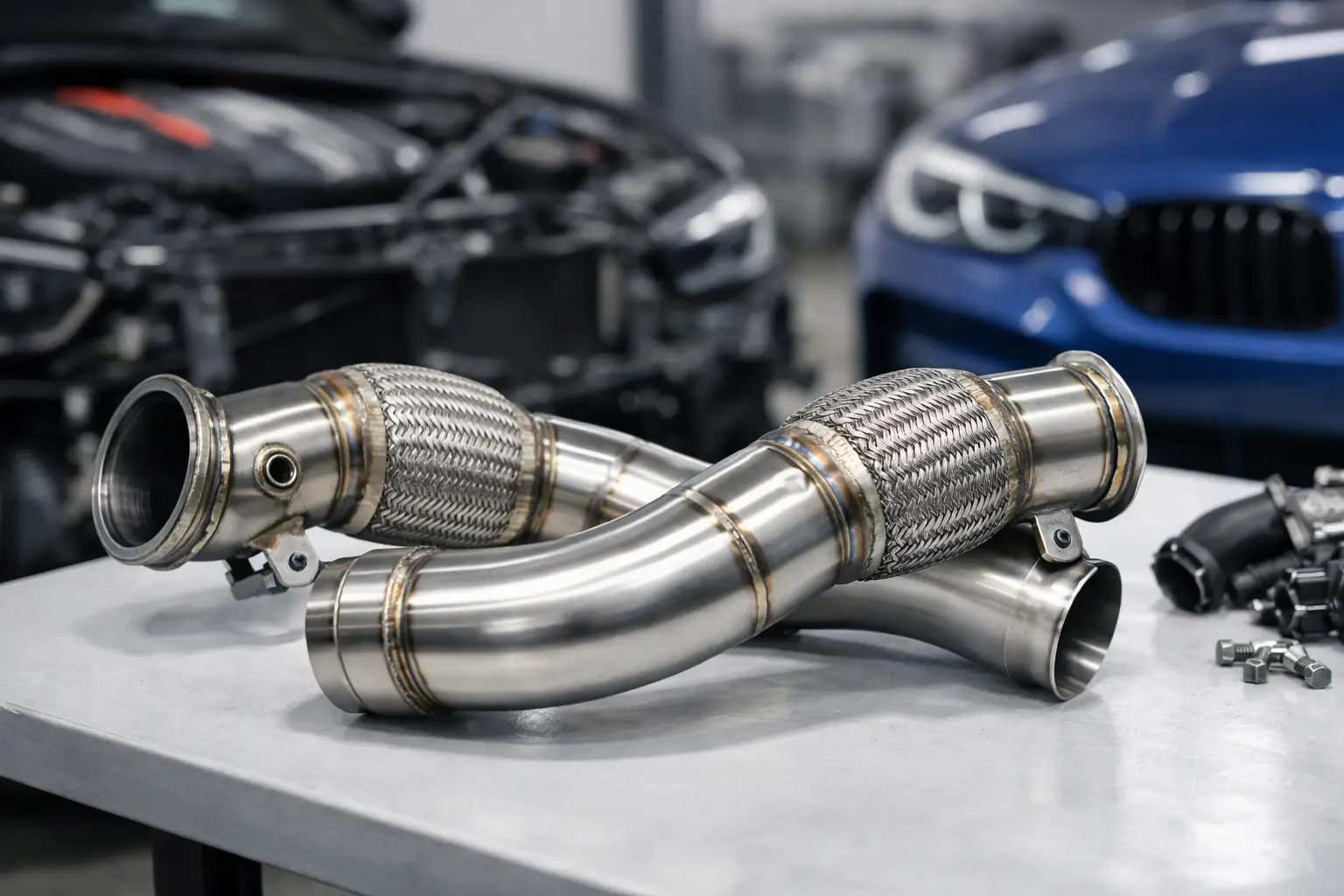
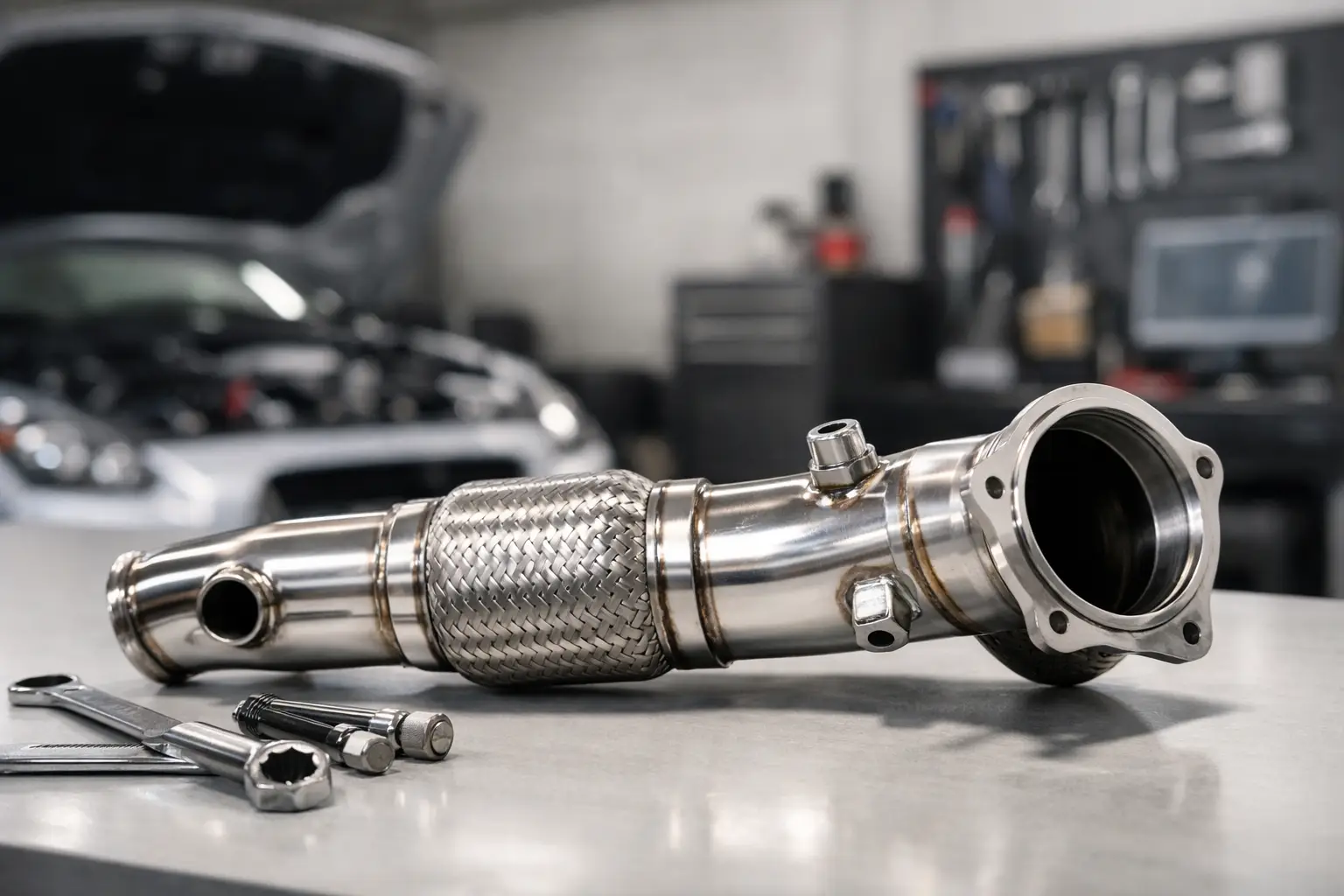
When comparing downpipes, stainless steel grade, weld quality, flex section design, and flange machining all matter. This is not just about appearance. Heat cycles, vibration, and tight packaging around a turbocharger will expose weak construction quickly.
T304 stainless steel is the standard most serious buyers should look for. It offers strong corrosion resistance and holds up well in demanding environments. Poorer materials or inconsistent welds can lead to cracks, leaks, and frustration, especially on high-heat applications.
Fit and finish also affect installation. A properly built downpipe should have clean welds, accurate bracket placement, quality hardware, and sensor bungs positioned correctly. On tightly packaged platforms, even small manufacturing inconsistencies can turn a straightforward install into unnecessary labor.
Diameter is important, but bigger is not automatically better
Downpipe sizing should match the airflow needs of the setup. A larger diameter can reduce backpressure, but oversizing without purpose does not always improve real-world performance.
For many stock turbo or lightly upgraded cars, a properly engineered pipe with smooth transitions is more important than simply choosing the largest diameter available. Once you move into higher horsepower builds, especially with upgraded turbochargers, larger sizing becomes more relevant. The key is matching the part to the airflow demand, not buying based on marketing alone.
Tuning, sensors, and check engine lights
If you are learning how to choose performance downpipe products, do not treat tuning as an afterthought. On most modern turbocharged European cars, a downpipe changes exhaust flow enough that engine calibration becomes part of the package.
Many applications will require software written to work with the upgraded hardware. Without proper tuning, you may leave power on the table, trigger fault codes, or create drivability issues. O2 sensor placement, catalyst efficiency monitoring, and emissions-related diagnostics all come into play.
That does not mean every setup is complicated, but it does mean you should buy with the full system in mind. The smartest path is to choose a downpipe that is known to work with your planned tune, your current turbo setup, and the rest of your exhaust.
Sound and heat should factor into the decision
A downpipe has a major impact on exhaust tone. It can make the car sound sharper, louder, and more aggressive, especially when paired with a freer-flowing cat-back. That can be exactly what you want, or exactly what makes the car less enjoyable to live with.
This is where honesty helps. If the car is a daily driver, think beyond the first cold start. Consider highway drone, startup volume in a garage, and the extra edge a catless system can add. If the car already has an aggressive rear section, a catted downpipe may deliver the better balance.
Heat management matters too. Turbocharged engine bays get hot, and downpipes sit in a critical area. Quality designs may include better routing, provisions for factory heat shielding, or construction that works well with thermal wrap or ceramic coating. On high-output builds, reducing underhood heat can help protect nearby components and support more consistent performance.
Emissions compliance is part of the buying decision
This is not the exciting part, but it is a real one. Emissions laws vary by state and by use case, and buyers need to know what is legal for their vehicle before making a decision.
A part that works perfectly on a track car may not be appropriate for a registered street car. If the vehicle must pass inspections or maintain road legality, that should shape your decision from the start rather than after the part arrives. The right answer is not always the most aggressive part. It is the one that fits your goals without creating avoidable problems.
Brand reputation and support still matter
A downpipe may look simple in a product photo, but support matters when fitment questions come up. Serious enthusiasts know that a trusted manufacturer with proven applications is worth more than a low-cost option with vague specs and inconsistent quality control.
Look for brands known on your platform, clear application data, and honest guidance about tuning and intended use. That is especially important for higher-end European builds where buyers care about fitment accuracy as much as power gains. At EAS Store, that consultative approach is part of the value, because the right part is the one that works for your exact setup the first time.
The best performance downpipe is the one that fits the whole build
The best choice is rarely the loudest, cheapest, or largest-diameter option. It is the downpipe that matches your exact platform, supports your horsepower target, works with your tune, and delivers the kind of driving experience you actually want.
If you are building a serious street car, a premium high-flow catted downpipe is often the strongest overall choice. If you are building for competition and maximum output, your priorities may shift. Either way, buying based on fitment, construction quality, and real application data will get you much farther than buying on hype. Choose the part that supports the car you are building, not the one that only sounds good in the product name.