A catch can is not a cosmetic engine-bay accessory. On a tuned turbocharged BMW, Audi, Volkswagen, or Mercedes, proper catch can installation can reduce the oil vapor returning through the intake tract, keep charge piping cleaner, and make future maintenance easier to understand. Installed poorly, it can create vacuum leaks, crankcase pressure issues, or a mess of loose hose and fittings that does nothing for reliability.
The difference comes down to application-specific fitment, correct PCV routing, and disciplined service. A quality catch can system should work with the engine’s crankcase ventilation design, not fight it.
What a Catch Can Actually Does
Every internal-combustion engine produces blow-by: combustion gases that pass the piston rings and enter the crankcase. The PCV system routes those gases back into the intake so the crankcase stays properly ventilated. Along with the gases comes a mist of oil, fuel vapor, and moisture.
A catch can sits in that path and separates as much contaminant as possible before the vapor returns to the intake. On direct-injected engines, this matters because fuel is not washing the backs of the intake valves. Over time, oil vapor can contribute to intake-valve deposits, intercooler contamination, and oily charge pipes.
That does not mean every engine needs a catch can on day one. A stock daily driver with short oil-change intervals may see modest benefit. A hard-driven, tuned, or high-boost vehicle generally has more to gain, especially when it sees track use, repeated heat cycles, or elevated cylinder pressure. The goal is not headline horsepower. The goal is cleaner airflow hardware and controlled crankcase ventilation as power and use increase.
Start With Platform-Specific Catch Can Installation
The best installation begins before a wrench comes out. Universal cans can work, but a vehicle-specific kit is usually the smarter choice for serious European performance platforms. It is designed around the factory PCV layout, available mounting points, hose lengths, fitting sizes, and engine movement.
For example, the crankcase ventilation strategy on an Audi RS3/TTRS 2.5TFSI is not interchangeable with a BMW S58 or an MQB EA888. Some engines have multiple ventilation paths. Others require different routing depending on whether the manifold is under vacuum or the engine is in boost. A kit that addresses only one side of the system may be appropriate for a specific goal, but it should never be selected by appearance alone.
Before ordering, confirm the exact engine code, chassis, model year, turbo configuration, and supporting modifications. Intake upgrades, turbo inlet changes, aftermarket manifolds, and upgraded charge pipes can all affect clearance and hose routing. This is where correct fitment support saves time and prevents expensive rework.
A properly engineered kit should include a sealed can, internal baffling or a separation medium, formed or quality-rated hose, secure fittings, and a bracket that mounts without improvisation. Avoid thin decorative cans with unknown internals. If the can cannot separate vapor effectively, it is simply another restriction in the PCV system.
Choose the Right Location and Mounting Strategy
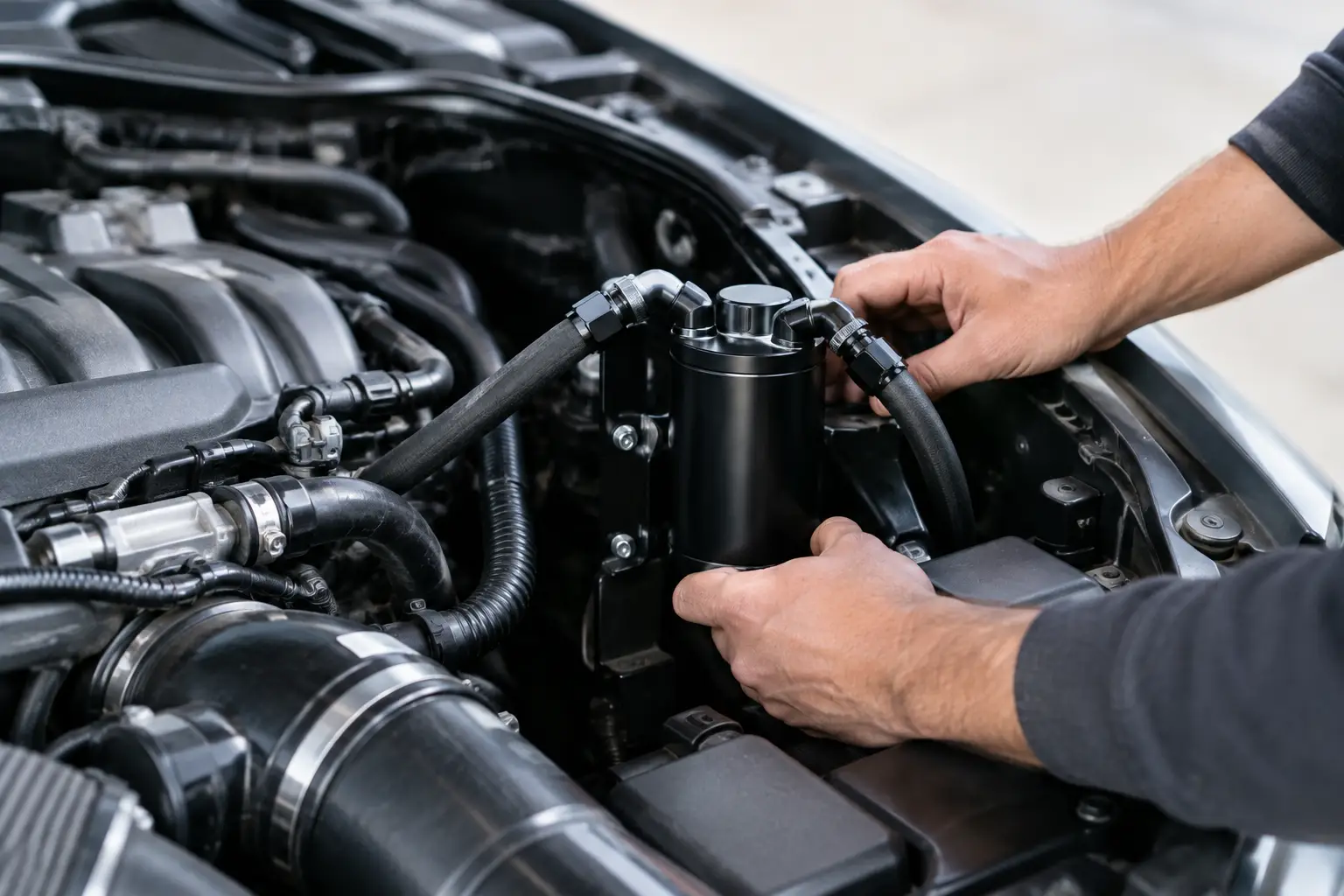
Mount the can where it is secure, accessible, and away from extreme heat. A factory-style bracket near the strut tower, firewall, or front corner of the engine bay is often ideal. The can must remain upright so its internal baffles and drain system can function as intended.
Accessibility matters more than many owners expect. A catch can that requires removing the intake, engine cover, or several panels to inspect will eventually be ignored. You need to be able to check the fluid level and drain it without turning routine service into a project.
Leave enough slack for engine movement, but do not allow hoses to sag onto hot exhaust components, accessory belts, sharp brackets, or the radiator fan area. Use proper clamps and retention points. A hose that looks acceptable in the garage can move dramatically under load, especially on vehicles with upgraded engine mounts or track-driven suspension setups.
If the system uses a drain valve, ensure the valve can be reached and cannot open accidentally. Some owners add a short drain hose for convenience, but it must be capped securely and kept away from heat. A leak at the bottom of a catch can defeats the purpose of a clean, controlled installation.
Keep the System Sealed
For most street-driven turbocharged applications, the catch can should remain a closed-loop system. Crankcase gases should be routed through the can and returned to the appropriate intake path, retaining proper ventilation and avoiding oil vapor release into the engine bay.
Atmosphere-vented setups are sometimes used on dedicated race cars, but they are not a universal performance upgrade. They can create oil smell, residue, emissions concerns, and crankcase ventilation behavior that is not appropriate for a street car. Local emissions rules also vary, so verify requirements before modifying any emissions-related plumbing.
Route the Hoses Correctly
Hose routing is the critical part of catch can installation. Follow the kit instructions and identify each port before disconnecting factory lines. Do not assume that two similar-sized connections are interchangeable.
Most systems are directional. The inlet side receives vapor from the valve cover or crankcase source, while the outlet returns cleaned vapor to the intake manifold, turbo inlet, or designated PCV return point. Reversing the lines may reduce separation efficiency. More seriously, incorrectly bypassing a check valve or using the wrong connection can affect crankcase pressure under boost.
Check valves deserve special attention. Their orientation determines when the system sees manifold vacuum and when it is isolated during boost. If a valve is installed backward, a boosted engine may pressurize areas that should be protected, leading to oil leaks, dipstick movement, poor idle quality, or fault codes.
Use hose rated for oil vapor and heat. Generic vacuum hose can soften, collapse, or sweat oil over time. Make clean cuts, avoid tight bends, and confirm that no line is kinked when the engine cover is reinstalled. If a line needs a sharp change in direction, a properly sized formed hose or fitting is better than forcing a bend.
After installation, inspect every connection twice. A small unmetered air leak can cause rough idle, lean-related codes, boost irregularities, or strange fuel-trim behavior that sends owners chasing unrelated problems.
Test the System Before Hard Driving
Once everything is installed, start the engine and let it reach operating temperature. Listen for hissing, watch for idle changes, and inspect each fitting for movement. If the vehicle has a scan tool available, check for fault codes and monitor fuel trims or crankcase-related values where supported.
Then perform a conservative road test before any wide-open-throttle pull. Pay attention to throttle response, boost consistency, idle after deceleration, and any unusual smell. Recheck the hoses after the first heat cycle because clamps and fittings can settle as the materials warm up.
A catch can should not cause a noticeable drivability change. If it does, stop and verify the routing. Do not assume a rough idle or warning light will “adapt out.” PCV plumbing directly affects how the engine manages airflow.
Service the Catch Can Like Any Other Performance Component
The contents of a catch can are rarely just oil. Depending on climate, trip length, fuel type, and engine condition, the collected fluid may look like dark oil, thin fuel-contaminated fluid, or a milky mixture of oil and water. Short-trip cars and cold-weather vehicles often collect more moisture.
Check the can frequently after the first installation. For many performance street cars, inspecting it at every oil change is a reasonable baseline. A vehicle that sees track days, drag-strip passes, high boost, or cold-weather commuting may need more frequent attention. Establish the interval based on what your engine actually collects.
When draining, use a suitable container and dispose of the contents with used oil. Never pour it onto the ground or into a household drain. Also inspect the hoses, clamps, and bracket during service. Heat and vibration expose weak hardware quickly.
A catch can is most effective as part of a broader maintenance strategy: quality oil, sensible oil-change intervals, a healthy PCV system, and parts selected for the vehicle’s actual power level. For a tuned European platform, the right kit and a precise install provide a practical layer of protection without compromising the clean, factory-level presentation serious builds deserve.
The best catch can setup is the one matched to your engine, installed without shortcuts, and serviced often enough that it keeps doing its job long after the first spirited drive.