A turbocharger choice can make an otherwise well-planned build feel razor sharp or frustratingly mismatched. Pick too small and power falls off when the engine needs airflow most. Pick too large and the car may make an impressive dyno number while losing the response that makes it enjoyable on the street or useful out of a corner. This Garrett turbocharger review looks at why Garrett remains a first-call brand for serious European performance builds, where its products shine, and what buyers should confirm before ordering.
Garrett Turbocharger Review: The Short Answer
Garrett turbochargers have earned their reputation because they combine proven engineering, broad sizing options, and dependable performance at power levels ranging from modest street upgrades to dedicated competition applications. For builders who care about compressor efficiency, transient response, turbine flow, and repeatable results, Garrett is not a brand chosen on name recognition alone.
The trade-off is that a Garrett turbo is not a universal solution. A quality turbocharger still needs the right manifold or housing, fueling, intercooling, calibration, wastegate strategy, and installation hardware. The best unit for an Audi RS3 2.5TFSI chasing 800 wheel horsepower is not the right unit for an MQB GTI that needs quick spool and strong midrange torque. Garrett gives builders the hardware options to match the goal, but the buyer has to define that goal honestly.
What Sets Garrett Apart
Garrett has long been a major name in original-equipment and motorsport turbocharging. That background matters because turbochargers operate in a punishing environment: extreme exhaust heat, high shaft speeds, pressure cycling, and oil control all demand precise engineering. Bearing system design, wheel aerodynamics, housing geometry, and balancing quality affect far more than a peak horsepower figure.
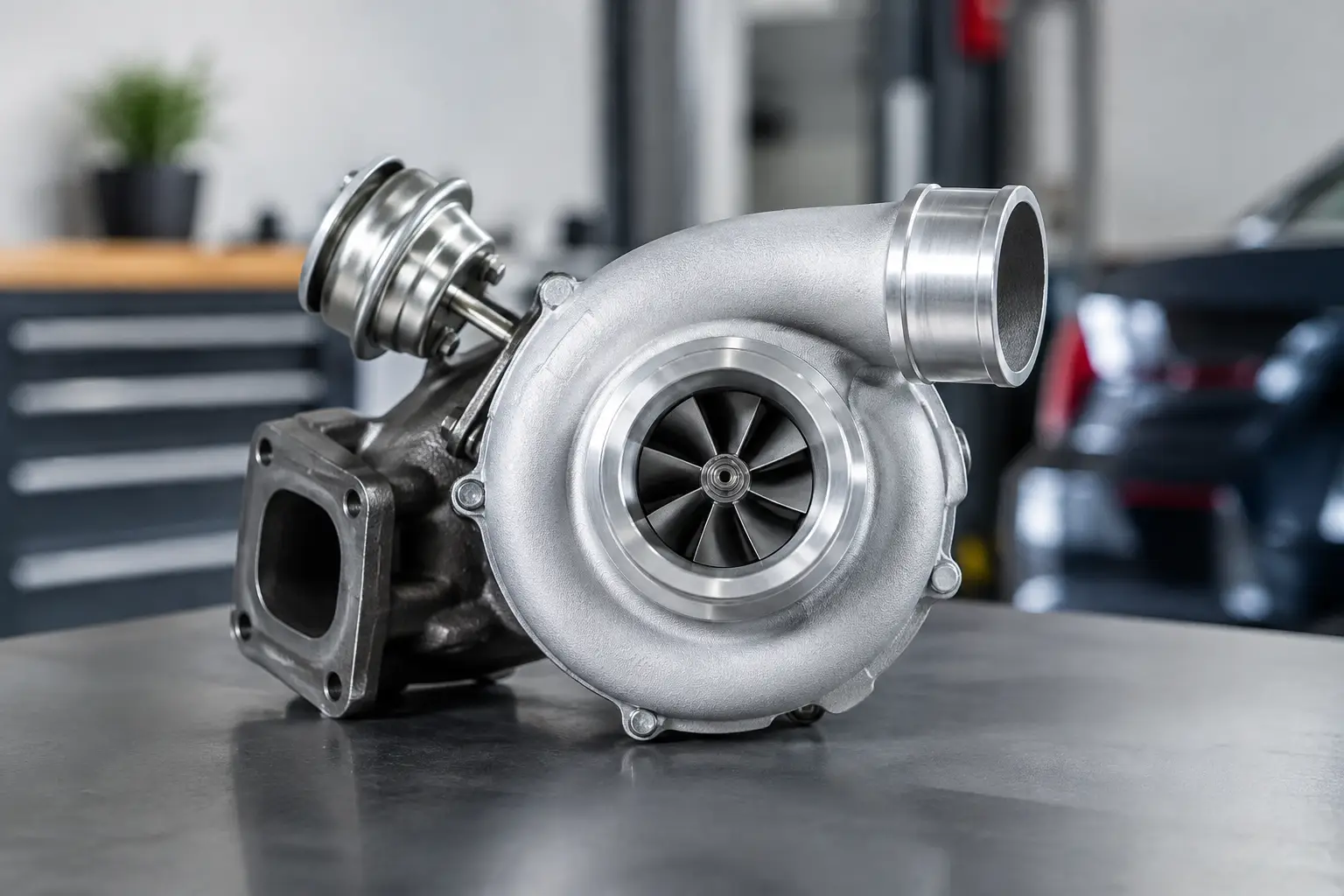
Modern Garrett performance families, including the GTX and G-Series range, are popular because they offer compressor technology designed to move significant air efficiently while preserving usable response. Depending on the specific model, buyers can choose between journal-bearing and ball-bearing configurations, different turbine housings, divided or open turbine entries, and several compressor cover arrangements.
Ball-bearing units generally command a higher price, but they can improve transient response and reduce the effort required to accelerate the rotating assembly. That can be valuable on a street-driven BMW S58, a time-attack Audi, or any application where the driver repeatedly moves on and off throttle. A properly selected journal-bearing turbo can still be an excellent choice, particularly for projects that prioritize durability, budget control, and high-flow capability over the last degree of response.
Garrett also benefits from a deep catalog of published data and established real-world use. Experienced tuners recognize the flow characteristics of common Garrett frame sizes. That shared knowledge makes it easier to plan supporting modifications and select a calibration based on a known setup rather than chasing claims from an unfamiliar turbo brand.
Spool, Power, and the Real Meaning of “Fast”
“Fast spool” is one of the most overused phrases in turbo discussions. A turbocharger does not respond in isolation. Engine displacement, compression ratio, camshaft profile, exhaust manifold design, turbine housing A/R, boost target, ignition timing, fuel type, and transmission gearing all influence when the car makes torque.
A Garrett G25-frame turbo, for example, may suit a responsive four-cylinder build where broad power delivery matters more than a maximum dyno result. Moving into a G30 or G35 frame can support substantially more power, but response will depend heavily on the turbine housing and engine combination. On a built 2.0T or 2.5T, that larger frame can be exactly right. On a lightly modified daily driver, it may be unnecessary.
For high-output six-cylinder and larger-displacement projects, Garrett’s larger G-Series options offer the airflow required for serious power targets. Here, the question shifts from whether the turbo can make the number to whether the rest of the system can support it. Fuel system capacity, charge-air cooling, engine internals, exhaust backpressure, and transmission limits should be evaluated before choosing a turbo based solely on compressor flow.
A useful approach is to set a realistic wheel-horsepower target, decide where in the RPM range the car needs to perform, and leave sensible headroom. Running a turbocharger near the outer edge of its map may produce the desired number, but it can create more heat and reduce the margin needed for consistent performance. A slightly larger, more efficient turbo can be the better long-term choice for a track car, while a smaller unit may feel better in a street car that spends most of its life below redline.
Fitment Is More Than the Turbo Itself
The most expensive mistake is ordering a high-quality turbocharger that does not integrate with the build. Garrett offers universal and application-oriented hardware, but “universal” never means bolt-on. Before purchase, confirm the turbine inlet and outlet style, compressor inlet and outlet dimensions, oil feed and drain requirements, coolant provisions where applicable, wastegate configuration, downpipe connection, and available space around the engine.
On European platforms, packaging is often the deciding factor. An Audi RS3/TTRS build may use a purpose-built turbo kit with a manifold, downpipe, intake, lines, and calibration designed around a specific Garrett unit. That package approach reduces fabrication variables and helps ensure the compressor cover, actuator or external wastegate, and charge piping work together.
BMW and Mercedes owners should be equally careful with electronic controls, emissions-related equipment, and stock-location versus top-mount layouts. A turbo that fits physically can still require custom plumbing, revised heat shielding, or changes to the intake tract. For a workshop, these details affect labor time. For a home builder, they often determine whether a project is completed over a weekend or sits waiting for additional parts.
Reliability Depends on the Entire System
Garrett turbochargers are built for demanding use, but no turbocharger can survive poor oil supply, contaminated oil, excessive crankcase pressure, or a bad tune indefinitely. Most premature turbo failures trace back to installation and supporting-system issues rather than a defect in the rotating assembly.
Use the correct oil feed restriction if the specific turbo requires one, make sure the drain line falls continuously to the sump, and prime the turbo before initial startup. Verify that the oil feed is clean and unrestricted. A reused line can hold debris from a previous failure, which is enough to damage bearings quickly. On water-cooled models, confirm coolant routing and bleeding as carefully as any other cooling component.
Calibration matters just as much. Overspeeding a turbo to chase boost outside its efficient range generates heat and mechanical stress. Excessive exhaust gas temperature and unstable boost control can also shorten component life. The right tuner will set the boost curve, wastegate control, ignition, fueling, and torque management around the actual hardware, not a generic file intended for a different setup.
Who Should Buy a Garrett Turbo?
Garrett is a strong choice for the enthusiast or shop that wants a known performance foundation and is prepared to build around it correctly. It is especially compelling for owners moving beyond stock-frame limits, fabricators creating custom turbo systems, and racers who need a turbo with established data and repeatable behavior.
It may not be the best answer for every owner. If a vehicle needs a straightforward factory-location replacement with minimal tuning changes, an OEM-style upgraded turbo can be more practical. If the goal is a specific stock-location package with all hardware included, selecting the complete kit engineered for that platform is usually smarter than piecing together a universal setup.
For serious builds, EAS Store can help narrow the choices based on platform, engine code, fuel type, intended power level, and the parts already installed. That support is valuable because the right turbocharger decision is rarely about one component. It is about making sure every part around it can do its job.
Final Buying Advice for Garrett Turbochargers
A Garrett turbocharger is worth the investment when its size and configuration match the way the vehicle will actually be used. Prioritize the complete combination over the largest advertised horsepower rating, budget for fueling and cooling before the turbo arrives, and verify every connection point before installation begins. A correctly matched Garrett setup delivers the kind of power that feels controlled, repeatable, and ready for the next hard pull.