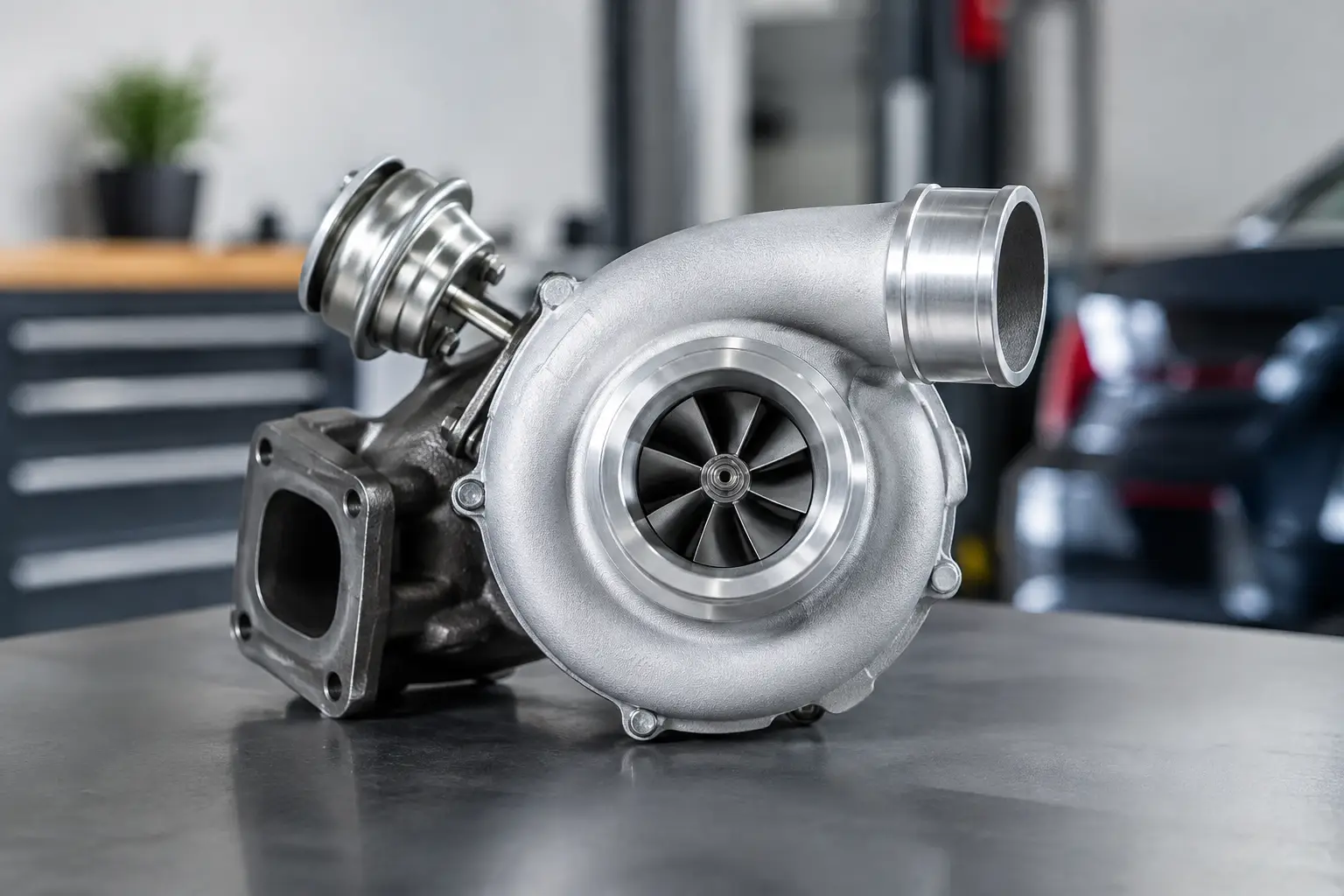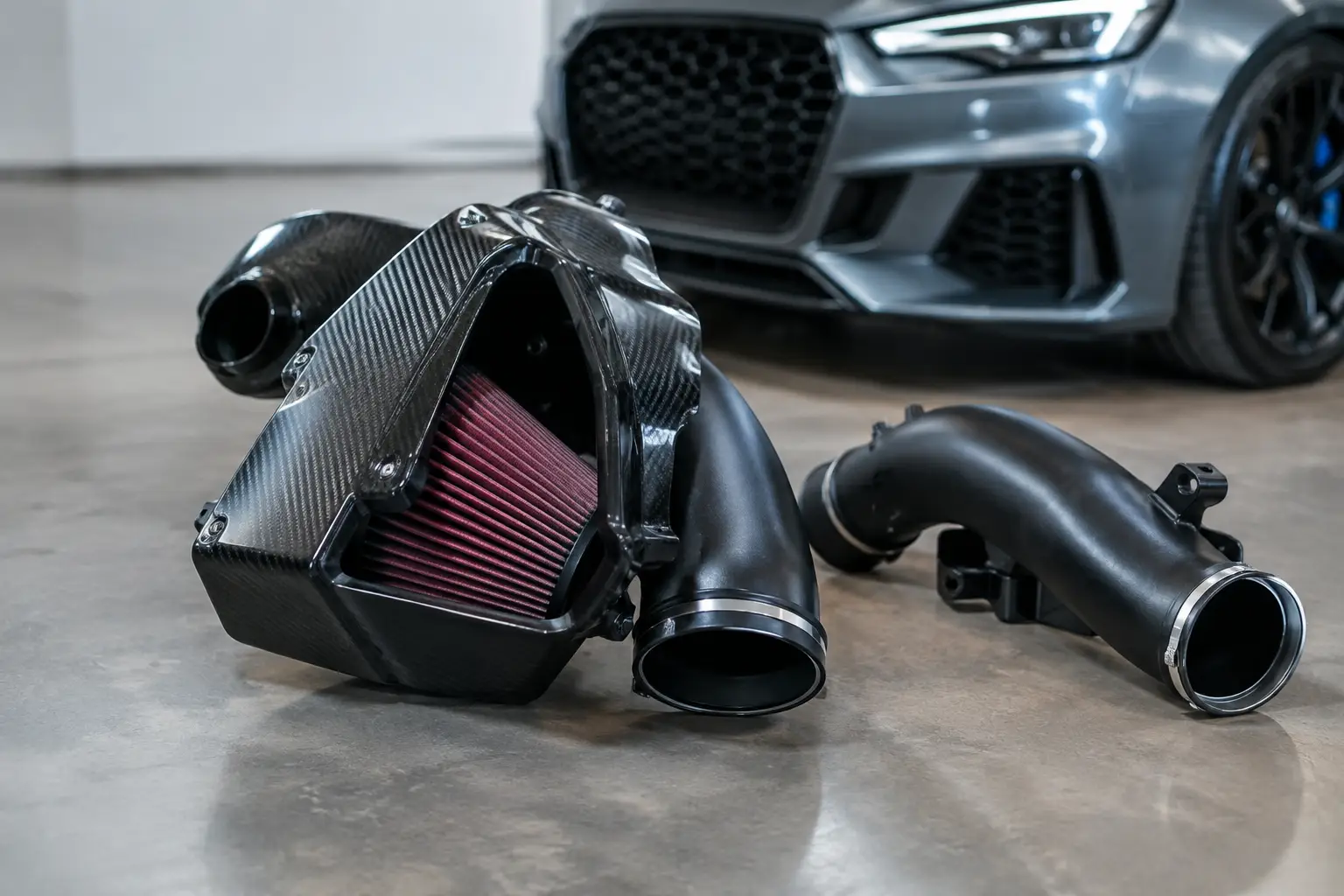
A factory short block can be remarkably capable – right up until cylinder pressure, heat, and sustained high-rpm use expose its limits. Built engine components are not a badge to add to a parts list. They are the foundation of a package designed around a real horsepower target, the fuel you intend to run, and how hard the vehicle will be used.
For a tuned daily-driven Golf R, RS3, M3, or AMG, the right answer may be selective reinforcement rather than a fully sleeved race engine. For a high-boost ethanol build, a road-course car, or a drag application chasing four-figure output, the margin for compromise becomes much smaller. The goal is not simply to buy the strongest part available. It is to build an engine whose parts, machine work, calibration, and supporting systems all work at the same level.
What Built Engine Components Actually Do
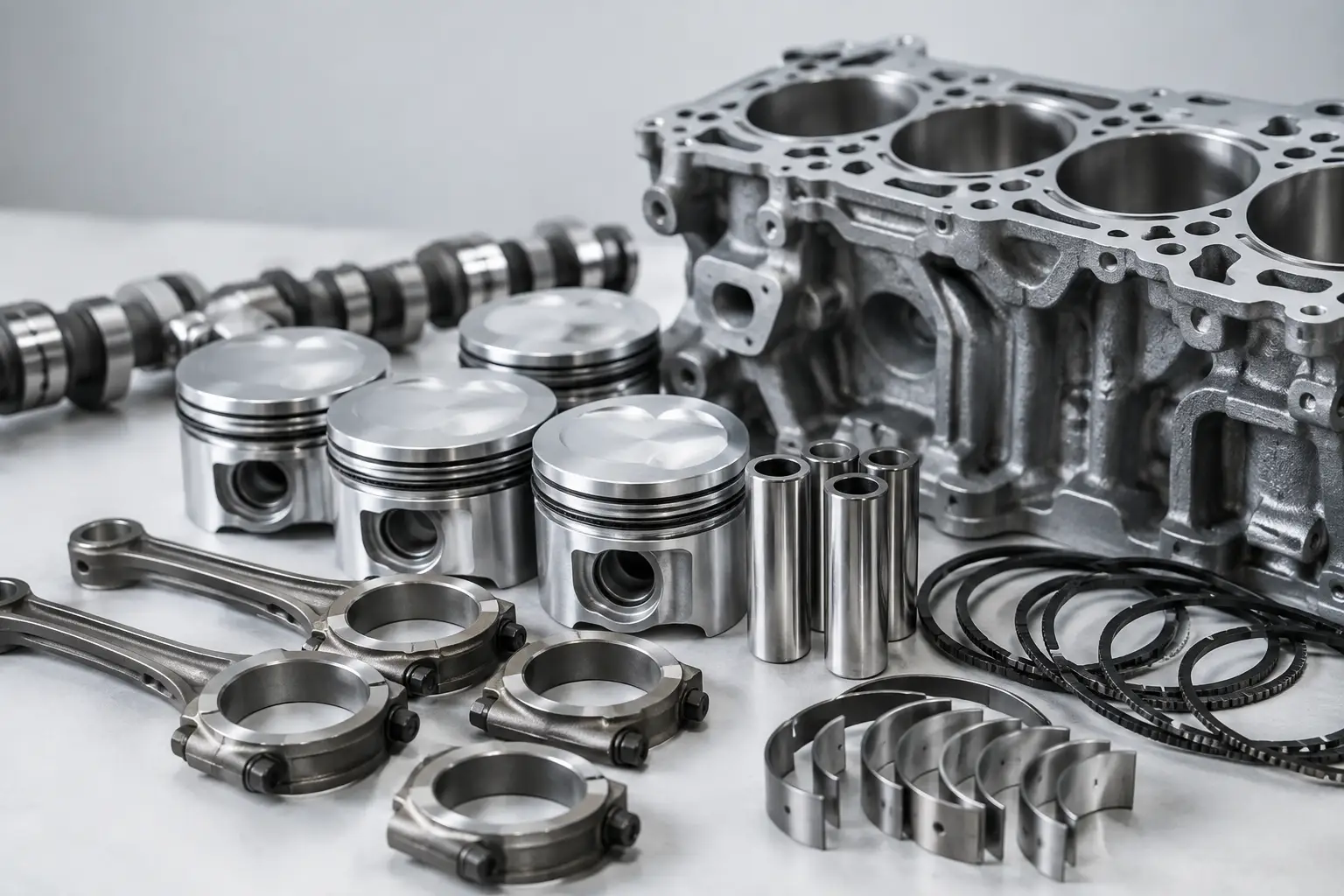
An engine becomes a “built” engine when its internal components and assembly specifications are upgraded to withstand conditions beyond the intended factory operating range. That usually starts with forged pistons and connecting rods, but a dependable combination also considers bearings, fasteners, crankshaft condition, valvetrain stability, ring gap, compression ratio, and block preparation.
Factory internals are engineered around an original power level, original torque delivery, emissions requirements, cold-start behavior, and a defined warranty life. A modern turbo engine may tolerate substantial gains, especially with conservative tuning. That does not mean every stock rod, piston, ring land, or head fastener will be happy with repeated high-load pulls on ethanol, elevated boost, and aggressive torque targets.
Forged pistons are commonly selected for their strength under heat and detonation resistance, while forged rods help manage the compressive and tensile loads created by high cylinder pressure and rpm. Premium rod bolts and main fasteners maintain clamping force when the engine is pushed beyond factory load. Performance bearings and careful clearance measurement support oil control at elevated power and temperature.
The component itself matters. So does the specification behind it. An excellent forged piston installed with the wrong piston-to-wall clearance or ring gap will not deliver the reliability expected from a premium build.
Start With the Power Goal, Not the Product Page
The most useful question is not, “What internals fit my engine?” It is, “What will this engine be asked to do?” A 550-wheel-horsepower street car on 93 octane, an 800-horsepower E85 car, and a competition build on race fuel can share an engine code while needing very different combinations.
Torque is often the deciding factor. A tune that creates a sharp, early torque spike can be harder on rods and pistons than a setup with similar peak horsepower delivered higher in the rev range. Turbo selection, boost control, ignition strategy, fuel quality, and transmission calibration all influence the load the short block sees.
Consider how the car will be used as well. A roll-racing car may see brief, extreme pulls. A road-course car lives through long periods of high oil temperature, repeated braking and acceleration, and sustained rpm. A street car needs cold-start manners, manageable noise, and dependable operation in traffic. There is no universal best piston alloy, compression ratio, or bearing clearance for every scenario.
Before selecting parts, establish the engine code, target wheel horsepower, fuel, turbocharger or supercharger plan, intended rpm limit, and primary use. This keeps the build focused and prevents the common mistake of pairing race-level internal parts with a fuel system, cooling system, or calibration that cannot support them.
Core Built Engine Components to Match as a System
Pistons, Compression, and Ring Package
Pistons set more than strength. Their bore size, dish volume, compression height, coating, pin design, and ring package affect compression ratio, combustion behavior, spool response, and thermal tolerance. Raising compression can improve response and efficiency, but it reduces knock margin when boost and pump gas are involved. Lower compression can provide more room for boost, though it may sacrifice some off-boost character.
Ring gap deserves the same attention as the piston itself. Higher cylinder temperatures cause rings to expand. If end gap is too tight for the power and fuel combination, ring butting can damage pistons and cylinder walls quickly. The correct ring specification depends on bore size, piston material, boost, fuel, and intended use – it is not a universal number pulled from a forum post.
Connecting Rods and Fasteners
A quality rod package is about beam design, material, wrist-pin fitment, big-end geometry, and especially fastener quality. Connecting rods experience enormous cyclic loads, and rod bolts are among the most critical fasteners in the entire engine. Reusing hardware beyond its intended service life or installing it without the manufacturer’s required stretch or torque procedure is an avoidable risk.
For popular European platforms, confirm that rods match the crankshaft, piston pin diameter, deck-height requirements, and the exact generation of the engine. Similar engine families can have meaningful differences in rods, pistons, oiling arrangements, and sensor provisions.
Bearings, Crankshaft, and Oil Control
Bearings are not glamorous, but they are central to engine longevity. Main and rod bearing clearances must suit the crankshaft journals, intended oil viscosity, oil pump capacity, oil temperature, and rpm range. A high-output engine needs stable oil pressure, not just a high number displayed on a gauge.
The factory crankshaft is often capable of impressive power, but it must be inspected and measured before it is reused. Journal condition, taper, out-of-round measurements, and balance all matter. Depending on the platform and output, the build may also require upgraded oil pump components, a baffled pan, improved pickup solutions, or a dry-sump system for serious track use.
Head Sealing and Valvetrain
Cylinder pressure tries to lift the head from the block. Upgraded head studs, the right head gasket approach, correct surface finish, and precise torque procedures protect the seal. On high-boost applications, head sealing is a complete system, not simply a stud upgrade.
Valvetrain requirements depend heavily on rpm and camshaft choice. Stronger valve springs may be necessary when raising the rev limit or using aggressive cam profiles, but excessive spring pressure adds wear and load. The right setup controls valve motion without creating unnecessary friction or stress. This is particularly relevant on engines built to hold power past the factory powerband rather than simply make more midrange torque.
Machine Work Is Part of the Component Choice
Premium parts cannot compensate for poor machining. Bore finish must match the piston and ring package. Deck surfaces need the proper finish for the selected head gasket. Main bore alignment, cylinder roundness, piston deck height, rotating assembly balance, and crankshaft thrust clearance all deserve documented measurement.
A reputable machine shop will measure first and machine to the actual components being installed. That distinction matters because nominal catalog dimensions are not assembly dimensions. The builder should work from the piston manufacturer’s clearance guidance, the bearing supplier’s targets, and the fastener manufacturer’s installation method.
For high-output builds, ask what measurements will be recorded during assembly. A serious answer should include bore dimensions, piston-to-wall clearance, ring end gaps, bearing clearances, deck height, and crankshaft endplay. These numbers are the proof behind the build, not optional shop trivia.
Do Not Outbuild the Supporting Systems
A built short block does not make an incomplete setup reliable. More cylinder pressure produces more heat. More airflow requires more fuel. More power stresses the transmission, clutch packs, axles, cooling system, and brakes.
On an RS3 or TTRS 2.5TFSI, a forged bottom end may be paired with larger fueling capacity, a turbocharger sized for the target, charge-air cooling, and a calibration that controls torque intelligently. On an S58-powered BMW, the build plan must account for fuel delivery, thermal management, drivetrain capacity, and the control strategy used to make power repeatable. On MQB cars, it is equally important to match the engine plan to DSG or manual transmission limits rather than treating the engine as an isolated project.
This is where a conservative calibration earns its value. A built engine can survive more load than stock, but it is not invincible. Lean fueling, uncontrolled knock, inadequate oil pressure, or excessive exhaust gas temperature can still damage the best internal components. Build strength should create a safety margin, not an excuse to remove every limit.
Choosing Parts With Confidence
Fitment accuracy is non-negotiable. Verify the exact engine code, model year, bore size, crankshaft configuration, and intended fuel before ordering. If the block has already been machined, buy components around the measured dimensions rather than assuming standard bore sizes still apply.
Brand reputation also matters because internal engine parts carry consequences far beyond a simple bolt-on installation. Look for manufacturers with clear technical data, documented materials, consistent machining, and application-specific support. For complex European performance builds, EAS Store can help match premium components to the power level and platform instead of leaving you to piece together a combination from generic listings.
A properly planned engine build is not defined by the longest spec sheet. It is defined by how confidently the car starts, runs, holds oil pressure, manages temperature, and delivers power every time you ask for it.