A faint metallic tick at warm idle, copper-colored material in the oil filter, or a fresh oil analysis that shows elevated bearing metals can turn a BMW build from exciting to urgent. For certain engines, choosing to replace BMW rod bearings before a failure is not overreacting. It is preventive maintenance that can protect a crankshaft, block, and an investment in serious performance parts.
The key is avoiding blanket advice. Rod-bearing service depends on the BMW engine, mileage, oil-change history, use case, tuning level, and inspection results. An S65 or S85 with unknown history deserves a different conversation than a well-maintained B58 street car. Knowing that difference is how owners and shops make smart decisions rather than replacing parts based on internet panic.
When to Replace BMW Rod Bearings
Rod bearings support the connection between each piston rod and the crankshaft journal. They operate on a thin, pressurized film of oil at extreme speed and load. When that film is compromised by contamination, heat, inadequate clearance, low oil pressure, or degraded oil, the bearing material can wear through. Left alone, that wear can damage the crank journal and progress into a catastrophic engine failure.
BMW S65 V8 and S85 V10 owners are especially familiar with preventive rod-bearing replacement. These high-revving M engines have earned their reputations for bearing wear concerns, particularly as mileage accumulates or service history becomes uncertain. That does not mean every engine is failing, nor does it mean a specific mileage number guarantees a problem. It means these platforms warrant informed inspection and a proactive maintenance plan.
A car that sees frequent track days, sustained high-rpm driving, repeated cold starts, or long oil-change intervals carries more risk than a lightly driven weekend car with meticulous records. Forced-induction builds also deserve closer attention. More cylinder pressure and torque increase loads through the rotating assembly, so a tuned engine should never be treated exactly like a stock commuter.
Mileage is useful context, but it is not a diagnosis. A documented engine with frequent oil service, proper oil temperature management, and conservative street use may show excellent bearing condition at higher mileage. An engine with unknown oil history or recurring low-oil events can justify inspection much earlier.
Signs That Call for Immediate Inspection
A rod-bearing problem does not always announce itself with a dramatic knock. In fact, waiting for obvious noise is a poor strategy. By that point, the damage may already extend beyond serviceable bearings.
Start by checking the oil filter during every oil change. Fine metallic debris, visible flakes, or copper-bronze material are reasons to stop and investigate. A magnetic drain plug can catch ferrous material, but rod-bearing material is not necessarily magnetic, so it cannot be the only inspection method.
Used-oil analysis can add valuable trend data. Elevated copper, lead, tin, or other wear metals may point toward bearing deterioration, especially if readings climb between samples. It is a screening tool, not a final verdict. Oil analysis cannot show clearance, journal condition, or the cause of the wear, and one abnormal report should be evaluated alongside filter inspection and the engine’s history.
Oil-pressure warnings, unexplained pressure drops, persistent metallic noise, or glitter in the drained oil require more urgency. Do not continue making pulls, attending track events, or assuming a thicker oil will solve a mechanical issue. A bearing service performed early is far less expensive than a crankshaft repair or a complete engine replacement.
Choosing Bearings for Your BMW Engine
Correct fitment is everything. BMW engines do not share one universal bearing set, and the right choice goes beyond matching the number of cylinders. Confirm the exact engine code, production range, rod design, crankshaft condition, and whether the engine remains at standard dimensions. S65, S85, N54, N55, B58, and S58 applications each require platform-specific research rather than assumptions.
Premium performance bearings are typically selected for their material construction, coating options, dimensional consistency, and intended oil-clearance range. Coated bearings can offer an extra margin during cold starts and transient lubrication conditions, but they do not compensate for a damaged crankshaft, poor oil pressure, or incorrect assembly clearance. They are a component of a reliable build, not a shortcut.
The same applies to rod bolts. If the procedure calls for new fasteners, use the correct high-quality hardware and follow the fastener manufacturer’s instructions precisely. Reusing torque-to-yield hardware or mixing hardware specifications introduces unnecessary risk into one of the engine’s most critical assemblies.
For a modified BMW, parts selection should reflect the actual build. A naturally aspirated street S65, a supercharged V8, and a high-output S58 used for road-course events do not place identical demands on the oiling system or rotating assembly. This is where experienced parts guidance matters. EAS Store supports enthusiasts and specialty shops with premium components selected around real BMW applications, not generic catalog fitment.
What a Proper Rod-Bearing Service Involves
Replacing rod bearings is a precision engine service, not simply an oil-pan job. On many BMW platforms, access begins with safely supporting the vehicle and removing the components necessary to drop the oil pan. Depending on the chassis and engine, that can include bracing, steering or suspension-related parts, undertrays, and oil-pump hardware. Shop manuals and platform-specific procedures are essential.
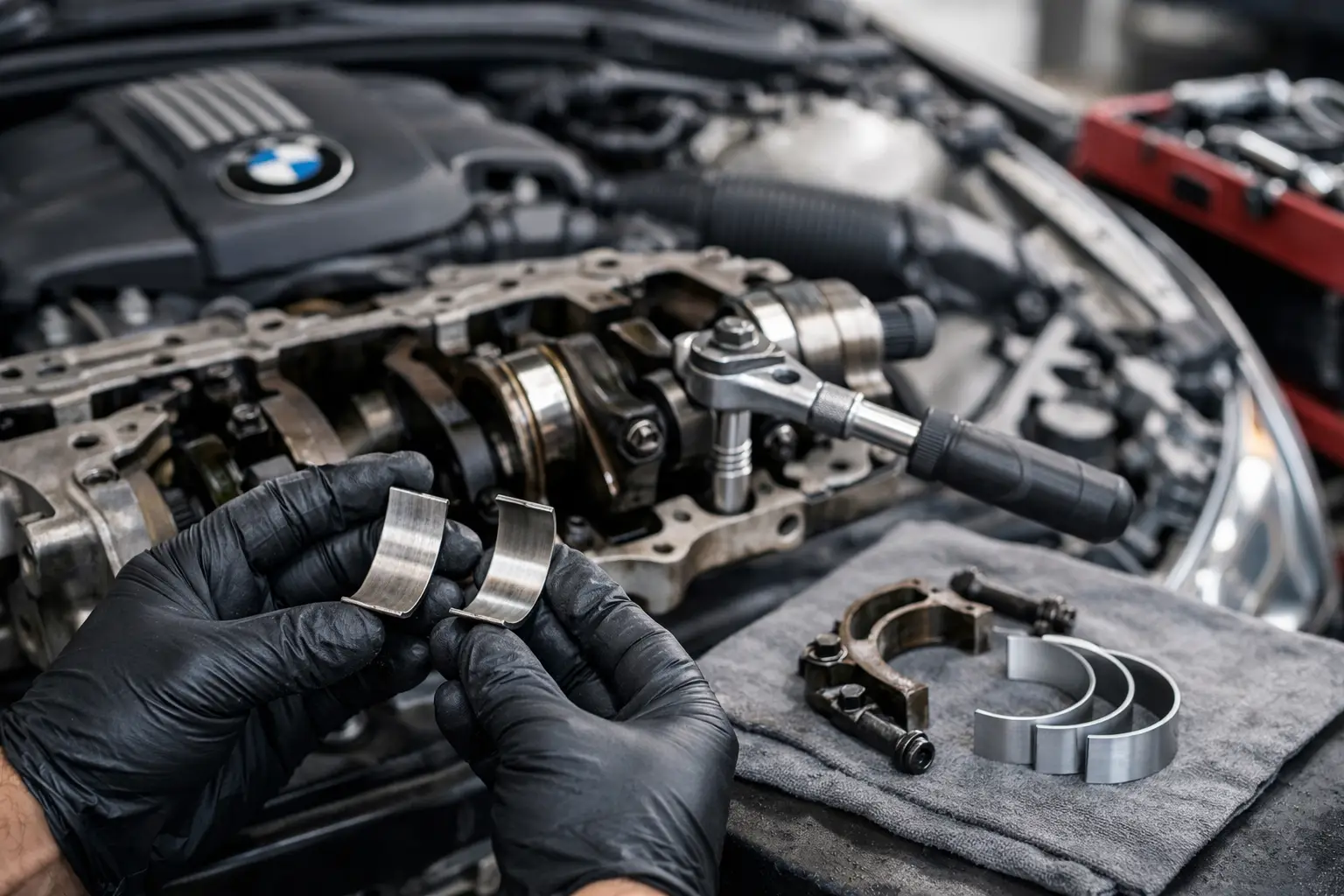
Once access is available, the technician removes and services one rod cap at a time to keep every component organized. Bearing shells are inspected for uneven wear, scoring, heat discoloration, embedded debris, and exposed underlying material. The crankshaft journals must also be inspected closely. A worn bearing may be replaceable; a scored or out-of-spec crank journal changes the scope of the repair.
Clearance verification is where quality work separates itself from a rushed install. The crankshaft journal and bearing bore need to be measured with appropriate precision tools, then compared against the intended specification. Assembly lube, proper cap orientation, fastener procedure, and final torque sequence all matter. So does keeping the work area exceptionally clean. A single piece of debris in a bearing surface can undermine the entire job.
Before the engine returns to service, inspect the oil-pump pickup, pan, sealing surfaces, and any accessible oiling-system components. If bearing damage is found, the source must be considered. Contamination from another failure, fuel dilution, an oil-pressure issue, overheating, or poor prior service can ruin new bearings if the root cause remains.
Supporting Mods That Protect the Investment
Rod bearings live or die by lubrication quality and temperature control. The right oil viscosity for the engine and climate, a quality filter, sensible oil-change intervals, and consistent oil-level checks are foundational. For track-driven or high-output cars, oil-cooling capacity and oil-pressure monitoring can provide useful protection and early warning.
Avoid extending oil intervals simply because the car sees low annual mileage. Short trips, moisture, fuel dilution, and aggressive use all affect oil condition. Likewise, do not hammer the engine before oil temperature has stabilized. High rpm with cold oil places unnecessary stress on every lubricated surface in the rotating assembly.
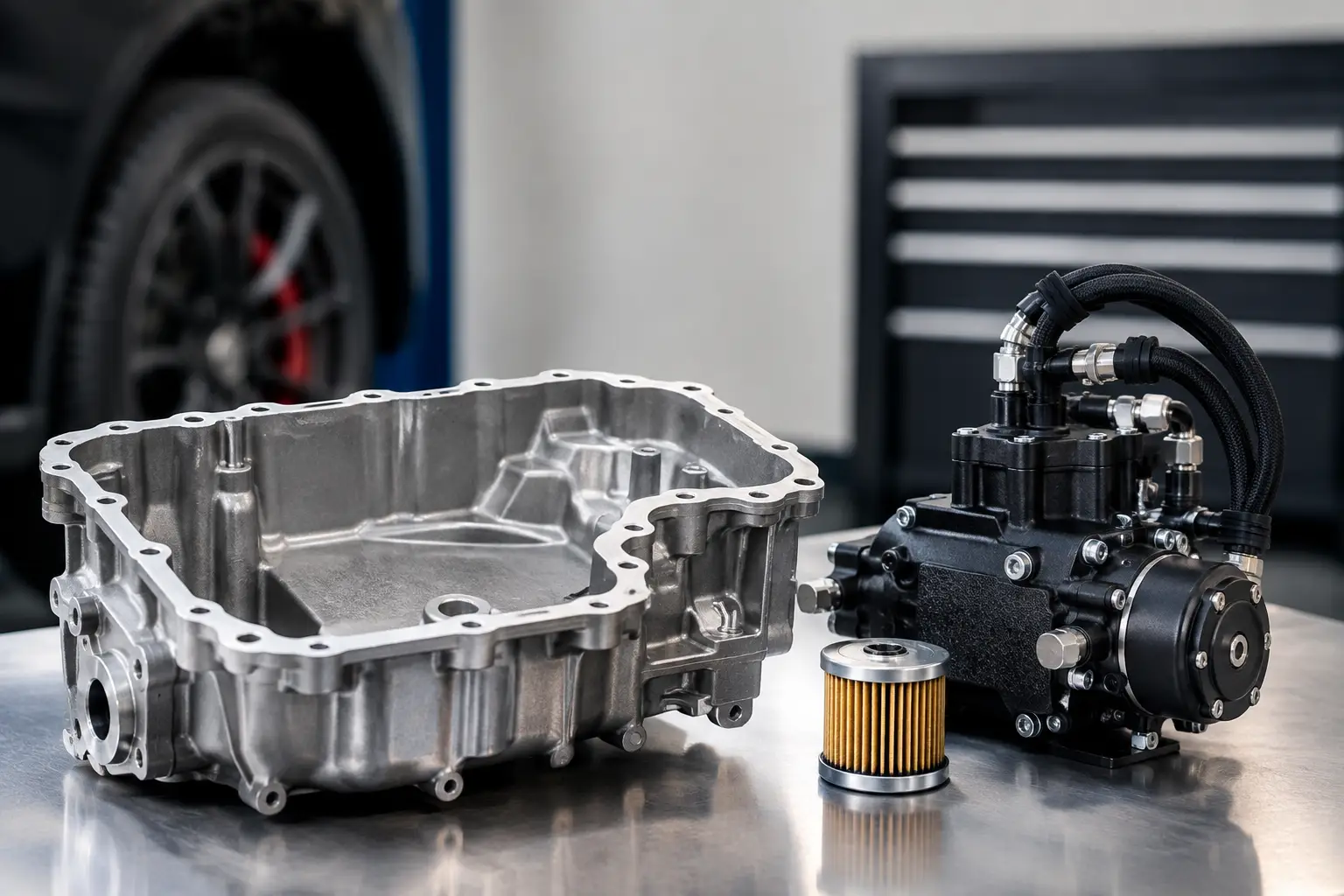
A baffled oil pan, upgraded pickup solution, or other oil-control components may be appropriate on applications that see sustained lateral load. These upgrades are not mandatory for every street BMW, but they are worth evaluating for cars that spend real time on sticky tires, at road courses, or under high-G braking and cornering.
Do Not Let a Bearing Job Become Guesswork
The right time to replace bearings is before avoidable damage occurs, but the right parts and process matter just as much as timing. Document what comes out of the engine, inspect the crank properly, and make decisions based on measurements and use case rather than a universal mileage rule.
For the owner building a dependable street car or the shop preparing a BMW for repeated track use, rod bearings are one of those services where disciplined preventative work pays off long after the oil pan is back in place.