An 800-hp build is not a turbocharger with a few supporting mods. It is a system where airflow, fuel volume, cylinder pressure, heat control, calibration, and torque delivery all have to agree. When owners ask what parts support 800hp, the useful answer starts with the platform, whether the target is wheel horsepower or crank horsepower, and how the car will actually be used.
An 800-hp Audi RS3, BMW S58, or MQB-based Volkswagen can be a fast, repeatable street and track car. It can also become an expensive collection of weak links if a build is planned around a peak dyno number instead of the components required to live at that number. The right parts are not always the most extreme parts. They are the parts matched to your engine code, fuel choice, powerband, transmission, and intended duty cycle.
What Parts Support 800 HP on a European Build?
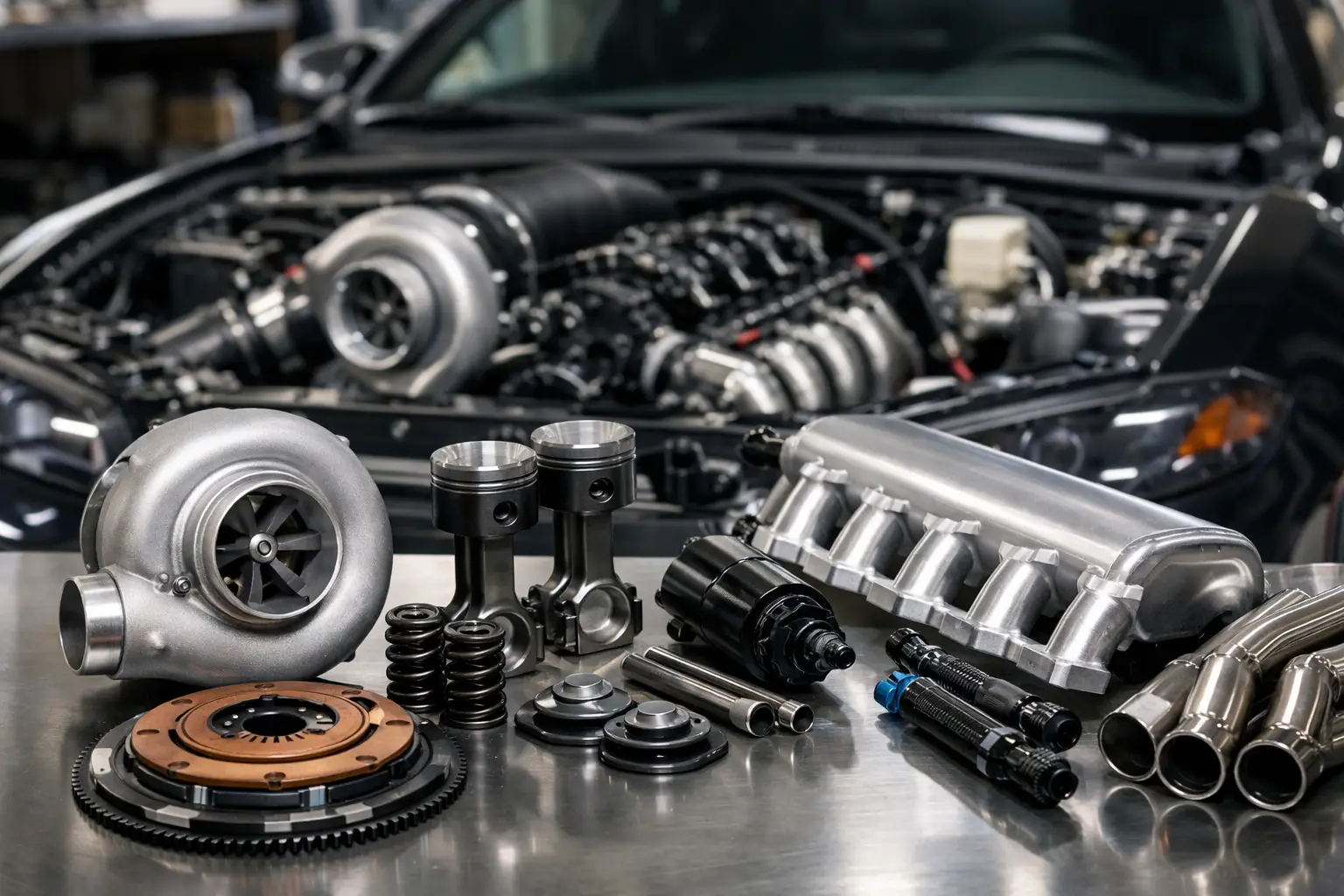
The core package usually includes a properly sized turbo system, fuel system upgrades, charge-air cooling, exhaust flow, engine hardware where needed, a calibrated ECU and TCU strategy, and drivetrain components that can handle the torque. At this level, reliability comes from capacity and control. A fuel system with no headroom, an intercooler that heat-soaks after one pull, or a clutch operating at its limit can all end the project early.
Do not treat 800 hp as a universal parts list. An 800-wheel-hp five-cylinder 2.5TFSI places different demands on internals and fueling than an 800-crank-hp S58. Fuel matters too. E85 and race fuel can make the target more attainable, but they also demand substantially more fuel volume. Pump gas may require a more conservative boost and timing strategy to protect the engine from knock.
Start With the Turbo and Airflow Path
A turbocharger must move enough air efficiently at the intended boost pressure. Oversizing it can create lag and make a street car less enjoyable. Undersizing it forces excess shaft speed and heat, which produces an impressive dyno graph only briefly. Choose a turbo package with documented results on your exact platform, not a generic horsepower claim.
The supporting airflow path matters just as much. A high-flow intake, turbo inlet, charge pipes, intake manifold where applicable, and a free-flowing downpipe or exhaust reduce restrictions around the turbo. On modern European platforms, fitment is not a minor detail. Sensor placement, diverter valve arrangements, electronic wastegate control, and packaging vary by model year and engine variant.
At 800 hp, an upgraded intercooler is mandatory rather than optional. Look beyond core size alone. End-tank design, pressure drop, airflow through the stack, and real-world heat rejection determine whether the car repeats power after several pulls or loses timing as intake-air temperatures climb. For demanding road-course use, supplementary cooling systems can be just as valuable as a larger intercooler.
Fueling Is the Part That Cannot Be Guessed
Fueling is one of the first areas to verify and one of the worst places to compromise. Direct-injection engines may need upgraded high-pressure fuel pumps, low-pressure pumps, larger injectors, port injection, or a combination of these components. The correct path depends on the engine and fuel.
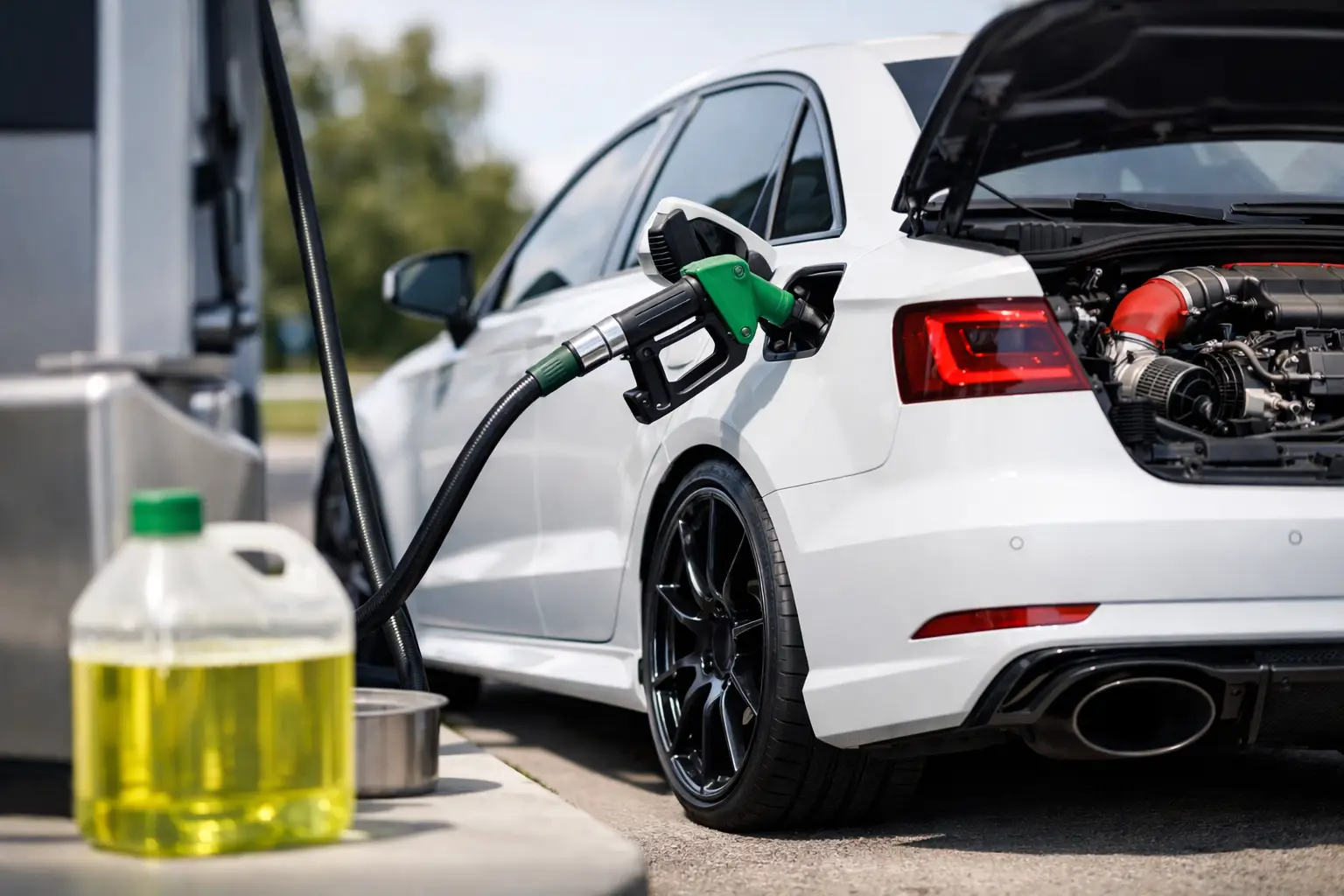
E85 requires roughly 30 percent more fuel volume than gasoline for the same air mass. That means a setup that is comfortable at 800 hp on race gas may run out of low-side volume on full ethanol. A proper ethanol-capable build needs compatible lines, fittings, pumps, filters, controllers, and flex-fuel monitoring when the calibration is designed to adjust for ethanol content.
Fuel delivery should have margin. If injector duty cycle, rail pressure, or pump capacity is already maxed out on a cool dyno day, the system has no reserve for hot weather, elevation changes, or a long pull through the gears. Verify fuel pressure under load through logging, not assumptions.
Tuning Is a Component of the Build
The ECU calibration ties every mechanical upgrade together. A professional tune must manage boost, ignition timing, lambda targets, fuel pressure, intake-air temperature compensation, torque limits, and factory safety strategies. On dual-clutch and automatic platforms, a matching transmission calibration is often required to raise torque limits and improve clutch pressure or shift behavior.
There is no safe universal 800-hp file. The tune must account for the exact turbo, fuel hardware, fuel blend, sensors, and engine condition. Quality calibration also means retaining useful safeguards where possible rather than simply disabling every fault or limiter that appears during the build.
Data logging should be part of ownership at this power level. Watch for boost deviation, timing correction, fuel rail pressure, low-side fuel pressure, lambda, intake-air temperatures, coolant temperature, and transmission temperature. A log can reveal a developing issue long before it becomes a damaged piston, slipping clutch pack, or failed fuel pump.
Does the Engine Need Forged Internals?
Sometimes. Not always.
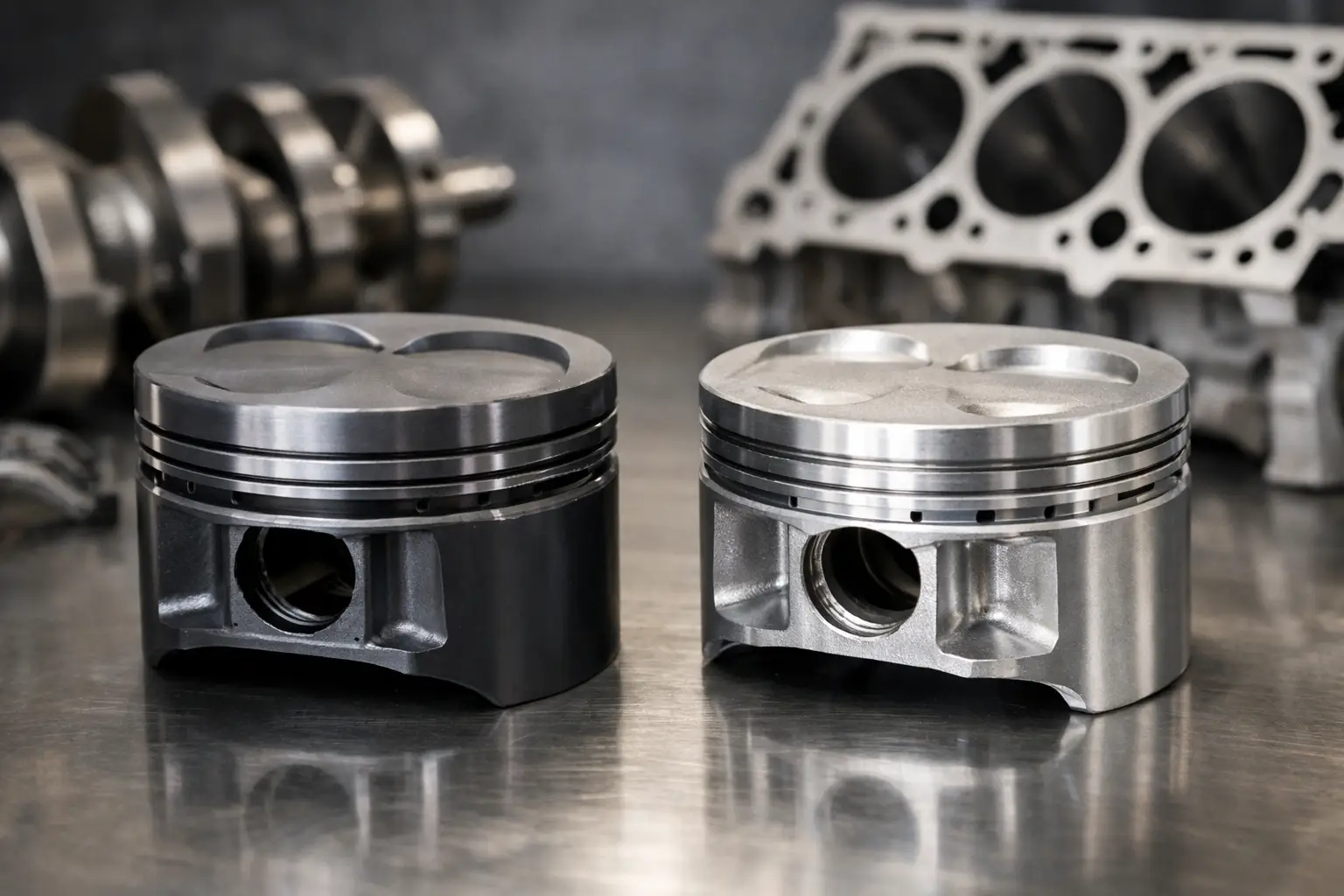
The question is less about a single horsepower number and more about cylinder pressure, torque delivery, detonation risk, engine mileage, and the known limits of the platform. Some modern European engines tolerate 800 hp with factory long blocks when the tune is controlled and torque is managed. Others need forged connecting rods, pistons, upgraded fasteners, and improved head sealing well before that point.
A stock engine may survive a high-rpm, lower-torque 800-hp setup better than a torque-heavy calibration that delivers maximum boost in the midrange. That is why serious tuners often shape torque rather than chasing the biggest possible number everywhere. The car can be faster, more consistent, and easier on the rods, clutch, transmission, and axles.
For a built engine, quality machine work matters as much as the parts themselves. Correct clearances, ring gap, cylinder finish, bearing selection, balancing, and assembly procedures determine whether forged components become a durable solution or merely expensive hardware. Consider upgraded valve springs, head studs, and a crankcase ventilation strategy when boost and sustained rpm exceed the factory design window.
Cooling and Oil Control Keep Power Repeatable
An 800-hp engine creates heat in every major system. A larger radiator, high-capacity intercooler, engine oil cooler, and transmission cooler may all be appropriate depending on the vehicle and use case. Street pulls, drag racing, and road-course sessions stress cooling systems differently.
Road-course cars need the most complete approach because they remain under load for extended periods. Cooling airflow, ducting, fan control, coolant condition, and oil-temperature management are all part of the equation. A car that makes the number once but pulls power after three laps is not an 800-hp track package.
Oil control deserves attention as well. Use an oil specification appropriate for the engine and operating temperature, maintain short service intervals, and inspect for fuel dilution on ethanol-driven cars. On platforms known for oil starvation under high lateral load, upgraded baffling or a dedicated oil-control solution is cheap insurance compared with an engine rebuild.
The Drivetrain Must Handle Torque, Not Just Horsepower
Horsepower sells parts. Torque breaks them.
Manual-transmission cars may require a clutch, flywheel, pressure plate, and sometimes upgraded gears or differential components. Dual-clutch transmissions often need clutch upgrades and calibration changes once torque exceeds the capacity of factory packs. Automatic transmissions may require upgraded internals, valve-body work, and additional cooling.
Do not overlook driveshafts, axles, wheel hubs, mounts, and differentials. Wheel hop is particularly destructive because it shock-loads the drivetrain repeatedly. Proper engine and transmission mounts, quality tires, aligned suspension geometry, and a limited-slip differential can make an 800-hp car more usable while protecting expensive components.
Brakes and tires are safety equipment at this output. High-performance pads, fluid, rotors, and appropriate tire compound should be selected for the vehicle’s speed and use. A drag-focused tire may transform traction in a straight line but be a poor choice for wet roads or track cornering. The best setup reflects the mission, not a catalog checklist.
Build Around a Target, Then Leave Headroom
Before ordering parts, define the target as 800 crank hp or 800 wheel hp, choose the fuel, and decide whether the car is a street build, roll-race car, drag car, or track car. Then select components with room above the target and confirm every interface: engine code, chassis, transmission, sensors, fuel compatibility, and tuning support.
This is where experienced parts guidance saves time. EAS Store works with enthusiasts and specialty shops building serious European platforms, helping match premium components to the actual vehicle rather than a generalized horsepower claim.
The smart 800-hp build is not the one with the longest mod list. It is the one that starts cleanly, holds fuel pressure, controls temperature, puts torque down without drama, and comes home after repeated hard use. Build for that result, and the dyno number becomes far more rewarding.