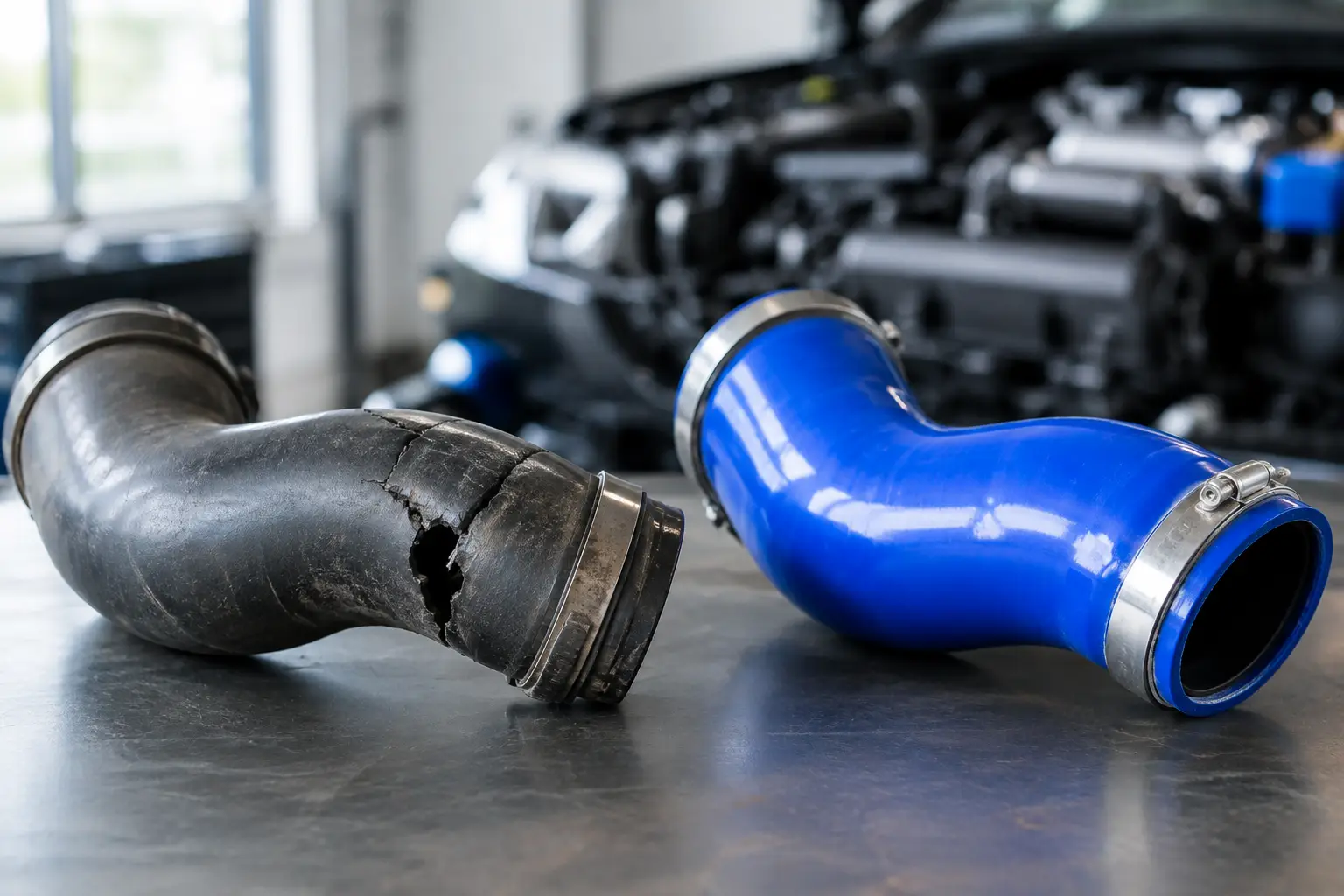
A stock plastic charge pipe can look perfectly healthy right up until a hard pull turns into a loud whoosh, a drivetrain warning, and an engine that suddenly feels flat. Charge pipe failures are a familiar issue on boosted European platforms, particularly when factory plastic plumbing is asked to contain more boost, more heat, and more pressure cycling than it was designed to handle.
For a daily-driven BMW, Audi, Volkswagen, or Mercedes, a failed charge pipe is usually not a catastrophic engine event. It is still a problem that deserves immediate attention. A boost leak can put the car into reduced-power mode, create inconsistent fueling corrections, and leave a tuned vehicle unable to deliver the power you paid for. The right repair is not always simply replacing the broken part with another factory piece. It depends on the platform, power target, turbo setup, and how the vehicle is used.
Why Charge Pipe Failures Happen
A charge pipe carries compressed air between key points in the forced-induction system. On many BMW applications, the term commonly refers to the pipe between the intercooler outlet and throttle body. On other platforms, it may describe boost-side plumbing from the turbocharger to the intercooler or from the intercooler to the intake. Regardless of the exact location, the job is the same: contain pressurized air without leaking, separating, or deforming.
Factory piping is often built around production cost, packaging, noise control, and stock power levels. Plastic can work well under those conditions, but it becomes a weak point when heat cycles, age, elevated boost, and aggressive driving enter the equation. The usual failure points are molded seams, plastic bends, retaining clips, O-ring sealing surfaces, and connections at the throttle body or intercooler.
BMW turbo engines have made this issue especially visible in the enthusiast market. N55 and S55 owners have long seen factory charge pipes crack or split, often after tuning raises boost beyond stock calibration. B58 and S58 applications use different designs and connection points, but the same principles apply: pressurized intake plumbing must match the power level and thermal demand of the build. Higher-output Audi, Volkswagen, and Mercedes platforms can experience similar issues with boost hoses, couplers, intercooler pipes, and factory plastic end connections.
Heat is a major contributor. The material sees underhood temperatures that rise sharply after repeated acceleration, track sessions, or stop-and-go driving. Then it cools down. Over thousands of cycles, plastic becomes less forgiving. Add a tune, upgraded turbochargers, ethanol blends, or launch-control use, and each pressure event places more stress on an already aging component.
Signs of a Failing Charge Pipe
The classic symptom is a sudden loss of boost under acceleration. The engine may still run smoothly at light throttle, then fall flat when boost is requested. You may hear an obvious rushing-air sound, a sharp pop at the moment of failure, or a whistle that was not present before.
A check-engine light or drivetrain malfunction message is also common, although the exact warning varies by manufacturer. The ECU may detect that requested boost and actual boost no longer match. Depending on the calibration, the car may limit torque to protect the engine and turbo system.
Not every leak is dramatic. A small crack, worn O-ring, or partially unseated connection can create intermittent power loss, slow spool, rougher-than-normal boost delivery, and fuel-trim changes. If the car has recently had intercooler, turbo inlet, intake, or engine-bay work performed, inspect every boost-side connection before assuming a major mechanical issue.
Oil residue around a coupler or pipe joint can also point toward a leak. A light oil film in turbocharged intake plumbing is not automatically a concern, but oil collecting around one connection often helps identify where pressurized air is escaping.
Diagnose the Leak Before Ordering Parts
A visual inspection is the right starting point, but it is not always enough. Look for split plastic, disconnected couplers, missing retaining clips, damaged locking tabs, and seals that have been pinched or rolled out of position. Pay close attention to the underside of the pipe, where a crack can be difficult to see with the component installed.
A pressure test or smoke test is the more reliable method when the failure is not obvious. With the intake tract tested at a controlled pressure, escaping air can be heard or traced to the exact joint. This helps distinguish a charge pipe problem from a leaking diverter valve, intercooler connection, turbo outlet pipe, intake manifold seal, or vacuum-related fault.
Diagnostic codes are useful, but they should not be treated as a parts list. An underboost code confirms that the system is not reaching its expected pressure target. It does not identify the failed component by itself. Replacing a charge pipe without checking the intercooler couplers, seals, and adjacent piping can leave the original leak unresolved.
If a pipe has blown off rather than cracked, inspect why. A worn retaining clip, damaged O-ring, incorrectly installed aftermarket connection, or excessive movement from an engine mount issue may be the real cause. Reinstalling the same parts without correcting the fitment problem can lead to another failure on the next high-boost pull.
Choosing an Upgrade That Fits the Build
An aluminum or reinforced composite charge pipe is one of the most sensible reliability upgrades for many tuned turbo platforms. The goal is not simply to buy the thickest-looking pipe. The part must have accurate geometry, secure connections, correctly placed sensor provisions, and seals designed for the application.
Aluminum charge pipes are popular because they resist cracking and hold their shape under heat and pressure. They are a strong choice for vehicles with software tuning, upgraded intercoolers, frequent spirited driving, or track use. Quality construction matters here. Clean bead-rolled ends, precise flanges, properly machined sensor bungs, and durable couplers are far more valuable than a flashy finish.
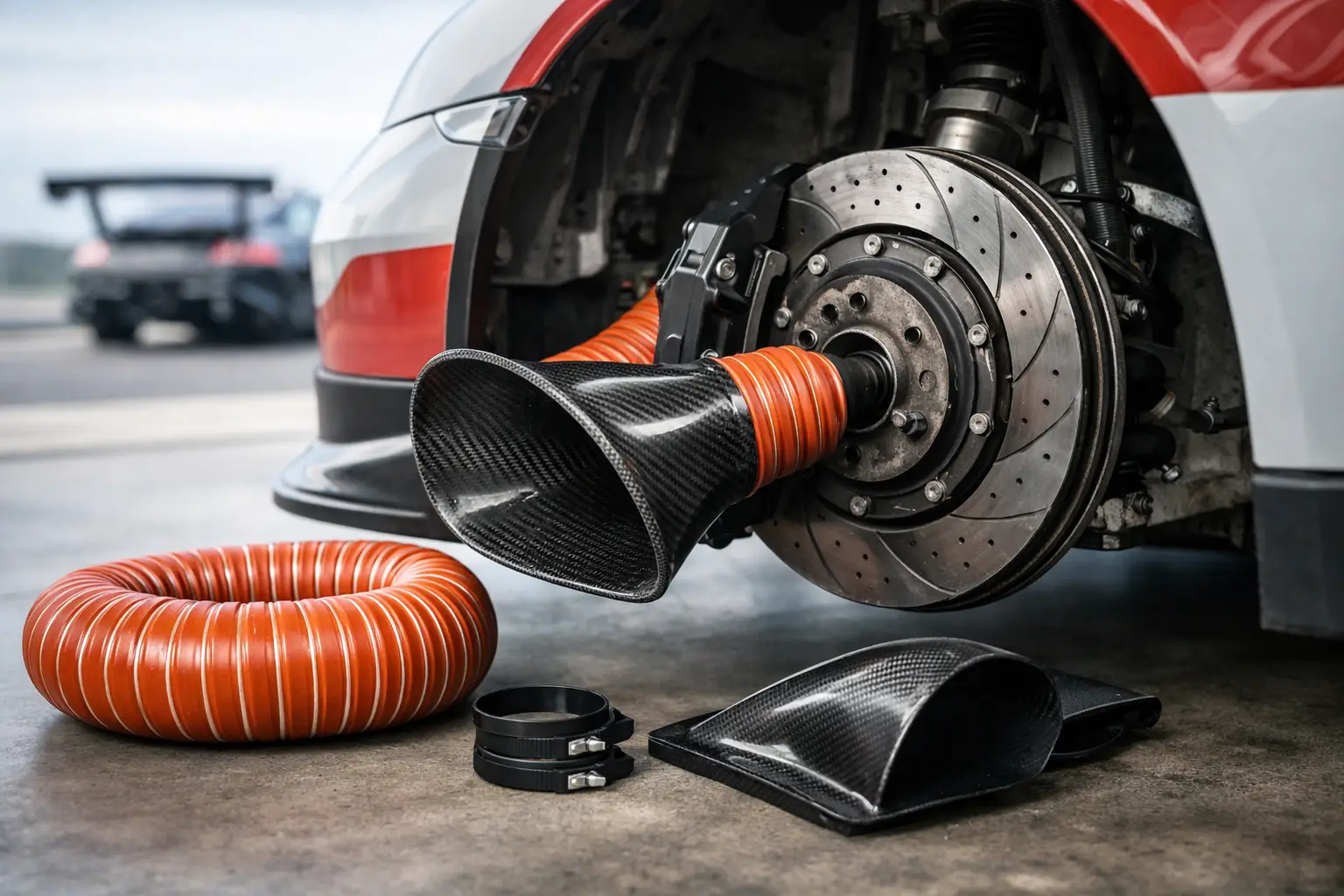
Silicone hoses can be an excellent option in the right section of the system, especially where movement and complex routing are involved. They need sufficient reinforcement and must be paired with the correct clamps. A low-quality silicone hose can balloon under pressure, while an overtightened clamp can cut into the material or distort a plastic mating point.
Fitment should be verified by chassis, engine code, model year, and turbo configuration. A part listed for a B58 BMW may not fit every B58-equipped vehicle. Differences in intercooler routing, sensor placement, throttle-body connection, and emissions equipment can matter. The same caution applies to MQB EA888 models, Audi 2.5TFSI applications, and Mercedes AMG platforms where similar-looking components can have different connections.
For stock-power daily drivers, an upgraded charge pipe may be preventive maintenance rather than an immediate requirement. If the factory part is in good condition and the car will remain stock, replacing it only when needed can be reasonable. For a tuned N55, S55, or other platform known for vulnerable factory boost plumbing, upgrading before failure is typically the smarter approach. The inconvenience of a roadside boost leak is rarely worth waiting for a plastic component to prove its limits.
Installation Details That Protect Reliability
Even premium parts can leak when installed carelessly. Inspect every O-ring before assembly and replace seals that are flattened, torn, brittle, or contaminated. A small amount of appropriate lubricant can help an O-ring seat without twisting, but excess lubricant can attract dirt and complicate inspection later.
Make sure each pipe is fully seated before locking a clip or tightening a clamp. Connections that feel nearly engaged can still be misaligned enough to blow apart under boost. On coupler-based systems, position clamps behind the bead roll and tighten them evenly. Do not assume maximum clamp torque equals maximum reliability.
After installation, clear any stored faults, inspect the routing for contact with hot or moving components, and perform a controlled test drive. A boost leak test after installation is ideal, especially on a vehicle with upgraded turbochargers or a calibration targeting higher boost pressure. It is faster to find a sealing issue in the shop than after the first full-throttle run.
Treat Boost Plumbing as a System
A charge pipe is one link in a pressurized system. When one weak component fails, it is worth evaluating the surrounding parts instead of focusing only on the visible break. Aging intercooler hoses, soft couplers, worn seals, weak clamps, and cracked turbo outlet connections can all limit a build that otherwise has the right hardware and calibration.
For serious street and track cars, matching boost plumbing to the rest of the setup protects both performance and confidence. EAS Store can help narrow the options by platform and intended power level, whether the priority is a dependable tuned daily or a high-output build with upgraded cooling and turbo hardware. Fix the leak correctly, confirm the fitment, and the next hard pull can be about acceleration instead of wondering which connection will let go.