
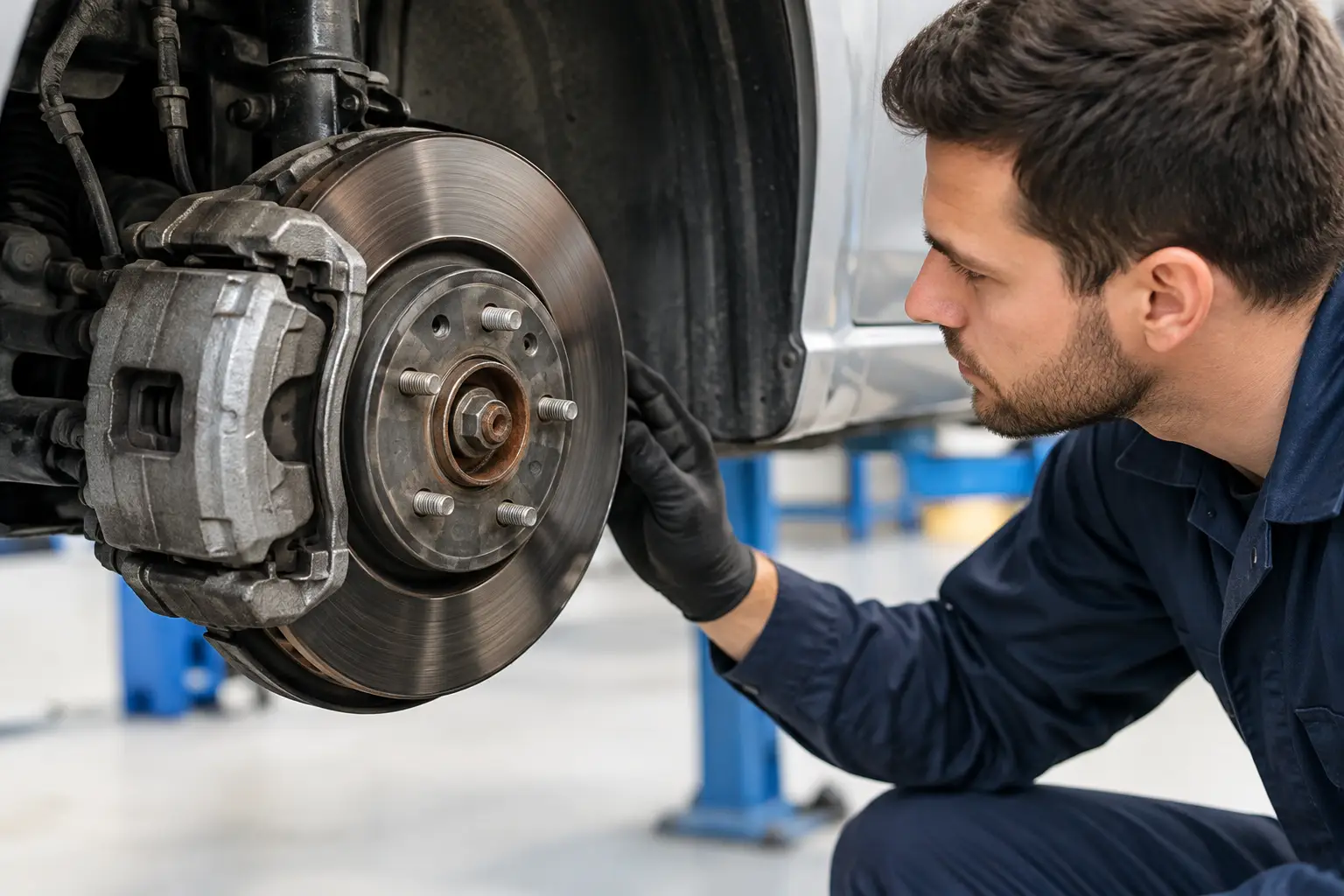
A 700-horsepower Audi RS3 on stock brakes may feel fine during a single highway pull. Brake hard repeatedly from speed, carry that power through a canyon road, or run a few hot laps, and the weak point becomes obvious fast. The real question is not whether bigger brakes look better behind a wheel. It is when should brakes be upgraded to match the way the vehicle is built and driven?
A brake upgrade is not automatically the first modification every enthusiast needs. Fresh OE-quality pads, rotors, fluid, and tires can be the right answer for a lightly modified street car. But when power, vehicle weight, speed, heat, or track duty move beyond the factory system’s operating range, an upgraded brake package becomes a reliability and confidence upgrade as much as a performance one.
When Should Brakes Be Upgraded? Start With Heat
Brakes turn vehicle speed into heat. That is the entire job. Factory systems are engineered around the original power level, curb weight, tire specification, and expected street use. They include a safety margin, but that margin can disappear when a car gains substantial horsepower, carries more speed between corners, or sees repeated high-load braking.
The first clear sign is brake fade. If the pedal remains firm but the car needs more distance to slow down after several hard stops, the pads are likely operating above their effective temperature range. If the pedal becomes long or soft as temperatures rise, the fluid may be boiling or the system may have another issue that needs immediate inspection.
Do not treat fade as a normal side effect of spirited driving. It means the current combination is being pushed beyond its intended thermal capacity. Higher-temperature pads and fresh high-performance fluid may solve the problem. For heavier cars, track use, or high-output builds, larger rotors, improved cooling, and a properly engineered big brake kit may be the more durable answer.
7 Signs Your Factory Brakes Have Reached Their Limit
1. Power has moved well beyond stock
More power does not directly make brakes stronger or weaker, but it raises the speed the car can reach before every braking zone. An MQB car with a tune and supporting hardware may still be comfortable on upgraded pads and fluid for street driving. A built RS3, TTRS, or G8X BMW making significantly more power than stock will generate far more brake heat in real use.
The key is the full build, not a single horsepower number. A 600-horsepower street car on conservative tires is different from a 600-horsepower car that sees roll racing, mountain roads, and track days. Build braking capacity around the vehicle’s actual speed and duty cycle.
2. You drive hard more than once
One aggressive stop proves very little. Repeated braking is what exposes limitations. If the brakes smell hot after a short back-road run, if pedal response changes halfway through a session, or if stopping performance falls away after several corners, the system needs more thermal headroom.
This is where premium pads, fluid, slotted or two-piece rotors, and brake cooling can deliver meaningful results. The goal is not simply a larger caliper. It is stable performance from the first hard stop to the last.
3. You are taking the car to track days
Track driving is the most common reason a street-oriented factory brake system reaches its limit. Even capable factory performance brakes can consume pads quickly and overheat fluid when asked to repeatedly slow a car from triple-digit speeds.
A track-ready setup should prioritize consistent friction, heat management, serviceability, and predictable pedal feel. That can mean a dedicated track pad and fluid on OE calipers for some platforms. For heavier vehicles or advanced drivers, a larger rotor and multi-piston caliper package can reduce heat load while improving control and pad life.
4. The pedal has changed, even after maintenance
A soft or inconsistent pedal is not a signal to order parts blindly. First inspect the system. Worn pads, old fluid, air in the lines, sticking caliper hardware, damaged hoses, and incorrect bleeding can all create poor pedal feel.
Once the system is confirmed healthy, recurring pedal softness under hard use often points to fluid temperature. A high-quality racing brake fluid with a higher dry boiling point can be one of the most cost-effective upgrades available. Stainless braided lines can improve pedal consistency on some applications, but they do not replace proper fluid, pads, or heat capacity.
5. Pads, rotors, and fluid wear out too quickly
Consumables wear. That is expected. The issue is whether they are wearing at a rate that makes sense for your use. Cracked rotors, heavily tapered pads, glazed friction material, or fluid that discolors rapidly after spirited driving are signs that temperatures or component selection need attention.
Do not assume drilled rotors are always the answer. For demanding track use, high-quality plain or slotted rotors are often preferred for durability. A two-piece rotor can reduce unsprung weight and make ring replacement more economical on certain premium brake systems, but it needs to suit the vehicle and intended use.
6. Tire grip has increased substantially
Sticky 200-treadwear tires, wider wheel packages, and modern ultra-high-performance tires allow a car to brake harder than its original tire package. That added grip can reveal pad limitations, rotor heat issues, and insufficient fluid capacity.
Tires and brakes work as a system. There is little value in adding an expensive brake kit if the tire cannot use the available stopping force. At the same time, fitting serious tires without addressing an already marginal brake setup can lead to higher loads and more heat at the track.
7. You need better control, not just shorter stops
For a single panic stop, a healthy factory system with good tires is often very effective. Performance brake upgrades earn their value through repeatability, modulation, and driver confidence. A firm pedal and predictable friction curve make it easier to trail brake, manage weight transfer, and place the car accurately at corner entry.
That matters on track, but it also matters on a fast street build. A brake package that responds the same way every time lets the driver focus on the road rather than wondering whether the next stop will feel different.
Choose the Right Level of Brake Upgrade
The best upgrade is not always the biggest package available. Start by identifying the failure point. If pads fade but pedal feel remains stable, choose a pad compound with the right temperature range. If the pedal goes long under repeated use, flush the system with quality high-temperature fluid and verify the bleed procedure. If the entire system is heat-saturated, move toward larger rotors, better airflow, and calipers designed for the application.
For a spirited street car, premium street-performance pads, fresh fluid, and quality rotors may be all that is needed. For a dual-duty car, a more aggressive pad compound, high-temperature fluid, and track-capable rotor solution can provide a major step forward. Dedicated track cars and high-horsepower builds often benefit from a complete big brake kit with larger effective rotor diameter, multi-piston calipers, and pads designed for sustained heat.
Wheel clearance is non-negotiable. Big brake kits are engineered around specific wheel diameters, barrel shapes, offsets, and spoke profiles. A 19-inch wheel is not an automatic guarantee of fitment. Confirm the brake kit’s template against the exact wheel before ordering, and account for any changes in suspension, wheel spacers, or hub components.
Avoid the Common Upgrade Mistakes
The most expensive mistake is buying calipers for appearance while ignoring pad choice, fluid, tires, and cooling. Another is choosing a race pad for a daily driver without accepting the trade-offs: noise, dust, reduced cold bite, and accelerated rotor wear can all be part of the package.
Brake bias also matters. Changing only one axle without understanding the system can affect ABS behavior and vehicle stability under threshold braking. Established vehicle-specific kits are valuable because they are developed around piston sizing, rotor dimensions, mounting geometry, and the factory electronic systems.
A quality brake upgrade should improve the complete experience, not create new compromises that make the car worse to drive. EAS Store can help match brake components to your platform, wheel fitment, horsepower level, and intended use, whether the goal is a sharper street pedal or dependable track-day braking.
The right time to upgrade is before the brake system becomes the limiting factor. If your build is faster, heavier, stickier, or used harder than the factory engineers anticipated, give it the stopping power to match – then drive it with the confidence that every brake zone will feel familiar.


