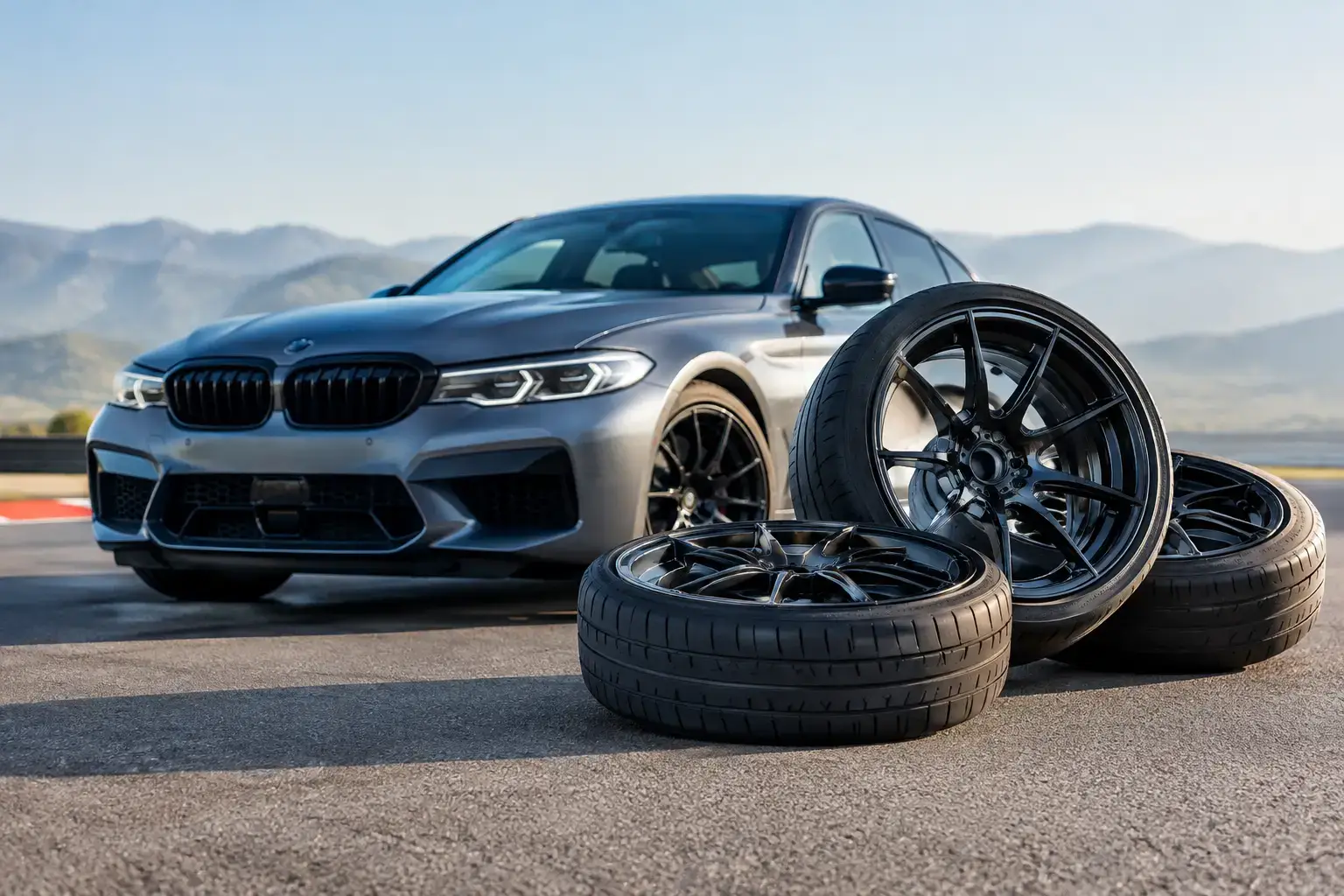
The best track wheels are not simply the lightest set you can buy. On an RS3, G80 M3, Golf R, or AMG, the right wheel has to clear the brakes, support the tire, tolerate repeated heat cycles, and fit the chassis without creating rubbing, vibration, or unstable handling. A wheel that looks perfect in the paddock can become a liability after two hard sessions if the specifications are wrong.
For serious European performance builds, wheel selection starts with the vehicle and the intended use. A dual-duty street and track car needs a different answer than a dedicated time-attack build on competition tires. The target is not a universal winner. It is a proven wheel and tire package that gives your specific platform more usable grip, predictable feedback, and confidence lap after lap.
What Makes the Best Track Wheels Different?
Track wheels live a harder life than wheels used for cruising or occasional spirited driving. They deal with high cornering loads, heavy braking zones, curbing, heat transfer from large brakes, and rapid tire changes. Strength, weight, brake clearance, and fitment all matter at the same time.
Reducing unsprung and rotating mass can improve how quickly the suspension responds and how willingly the car accelerates or brakes. That does not mean the lowest advertised wheel weight is automatically the right choice. An ultra-light wheel with insufficient load capacity or poor impact resistance is the wrong part for a heavy, high-power street car that sees aggressive track use.
For most enthusiasts, a quality flow-formed wheel is an excellent starting point. This manufacturing process creates a stronger, lighter barrel than a conventional cast wheel while keeping cost more accessible than a full forged design. Forged wheels remain the premium choice for demanding builds, especially where every pound matters and the car runs wide tires, substantial aero, slicks, or high wheel loads. They offer exceptional material strength and design flexibility, but their price reflects that capability.
A conventional cast wheel can still make sense for a beginner track car or a dedicated spare set, provided it comes from a reputable manufacturer with proper load ratings. The problem is not casting alone. The problem is buying an unknown wheel with unclear testing, questionable quality control, and no reliable fitment data for your chassis.
Fitment Comes Before Finish
Wheel diameter, width, offset, bolt pattern, center bore, and brake clearance must work together. Choosing one specification in isolation is how expensive mistakes happen.
Diameter is usually determined by brake package and tire availability. Many modern performance cars work exceptionally well on 18-inch wheels because they are lighter, tires are often more affordable, and the additional sidewall can help over rough track surfaces. However, factory carbon-ceramic brakes or large aftermarket brake kits may require a 19-inch wheel, and not every 19-inch design clears every caliper. A wheel can technically be the correct diameter and still hit the caliper spokes or barrel.
Width determines the tire section width the wheel can properly support. A wider wheel can support a wider tire, but it also changes inner suspension clearance, outer fender clearance, steering behavior, and tramlining on the street. On many BMW, Audi, Volkswagen, and Mercedes platforms, moving from a factory wheel to a square track setup can make tire rotation possible and create more neutral handling. On other chassis, especially those with different front and rear wheel architecture, a staggered setup remains the better solution.
Offset is where platform knowledge becomes essential. Too much positive offset moves the wheel inward and can contact the strut, spring perch, control arm, or inner liner. Too little positive offset pushes the wheel outward, increasing the chance of fender contact and altering scrub radius. Spacers can be useful for fine-tuning clearance, but they are not a substitute for selecting a wheel with a sensible starting offset.
For European cars, also verify the correct bolt pattern, center bore, hardware seat type, and wheel bolt or stud length. Audi and Volkswagen applications commonly use 5×112, while BMW fitment varies substantially by generation and model. A wheel that physically mounts is not automatically centered correctly or safe with factory hardware.
Brake Clearance Is More Than Diameter
Big brake clearance should be confirmed against the exact caliper, not assumed from a product photo or another owner’s setup. Spoke shape, barrel profile, wheel offset, rotor size, and caliper location all influence clearance.
This is especially relevant for performance platforms with factory upgraded brakes. An Audi RS3 or TTRS, BMW G8X, and Mercedes-AMG model may require a wheel designed around its specific brake envelope. If your car has an aftermarket big brake kit, request a brake template and check it against the wheel design before ordering. That small step prevents the common and costly scenario where a new wheel set clears the hub but not the caliper.
Tire Choice Should Drive the Wheel Package
The wheel is the structure. The tire is what connects the entire build to the track surface. A great wheel package begins by deciding which tire you want to run, then matching wheel width and diameter to that tire’s recommended range.
A 200-treadwear extreme-performance tire, a track-focused street tire, and a full competition slick do not behave the same way. Some tires run noticeably wider than their labeled section width. Others prefer the wider end of the approved wheel-width range for sharper response, while a slightly narrower wheel may provide more compliance and better behavior in standing water.
Avoid stretching a tire onto a wheel that is too wide simply for appearance. It reduces rim protection and can make the tire less predictable at the limit. At the other extreme, mounting a wide tire on a narrow wheel can roll the sidewall over during hard cornering, reducing steering precision and overheating the outer shoulder.
Tire diameter matters too. A significantly shorter or taller tire changes effective gearing, ride height, fender clearance, and speedometer readings. On cars with advanced stability control and all-wheel-drive systems, keeping front-to-rear rolling diameter within an appropriate range is particularly important.
Square or Staggered for Track Use?
A square setup uses the same wheel and tire size at all four corners. It is popular because it allows front-to-rear tire rotation, simplifies spares, and can add valuable front-end grip to cars that naturally understeer. For front-engine European platforms, this can be a major advantage over a factory staggered arrangement.
A staggered setup uses wider rear wheels and tires than the front. It can suit high-power rear-wheel-drive cars that need additional rear traction, and it may be necessary when the chassis, fenders, or factory suspension geometry limits front-wheel width. The trade-off is reduced rotation flexibility and a greater need to tune balance through tire pressures, alignment, and suspension.
Neither layout is automatically faster. A square 18×9.5-inch package may be ideal for one Golf R or M2, while a staggered 19-inch package is the smarter choice for another car running high output and a rear-biased track setup. The correct decision depends on the car’s weight distribution, power delivery, alignment range, tire compound, and driver goals.
Do Not Ignore Load Rating and Durability
Track driving creates high dynamic loads, particularly on heavier modern performance cars. A wheel’s load rating should comfortably support the vehicle’s corner weight and intended use. This becomes more critical with added power, aerodynamic downforce, sticky tires, curb strikes, and repeated lapping sessions.
Inspect track wheels regularly. Check the inner barrel, spoke junctions, bolt holes, and bead seat for cracks, bends, or impact damage. A vibration that appears after a track weekend may be a lost wheel weight, a damaged tire, or a bent wheel. Do not assume it is harmless.
It is also smart to maintain a dedicated track wheel set when possible. Keeping track tires off your daily wheels makes tire changes easier, protects premium street finishes, and lets you arrive prepared with a matching spare. For drivers chasing consistency rather than one impressive lap, that preparation pays off quickly.
The Best Track Wheels for Your Build Start With Data
Before ordering, gather the exact chassis, year, brake package, suspension setup, alignment, current tire size, and intended tire model. Include any coilovers, lowering springs, spacers, fender modifications, or aftermarket brakes. Those details determine whether a wheel package is proven fitment or an expensive experiment.
EAS Store supports enthusiasts who want performance parts selected around real applications, not generic catalog filters. When a wheel choice affects brake clearance, tire sizing, and suspension travel, informed fitment support is part of buying the right hardware.
Choose wheels with the strength to handle your sessions, the dimensions to place the tire correctly, and the clearance to let the brakes work without compromise. The right set should disappear beneath you on track, leaving you free to focus on braking later, carrying more speed through the apex, and driving the next lap cleaner than the last.