A stock bottom end can make impressive power right up until cylinder pressure, heat, detonation, or sustained high-rpm use finds its limit. Forged internals are not a cosmetic upgrade or a universal requirement. They are the foundation for builds where the engine must survive power levels and operating conditions beyond what the original pistons and rods were designed to handle.
For an Audi RS3 2.5TFSI, BMW S58, Volkswagen EA888, or another modern European performance platform, the right decision comes down to the power target, fuel choice, turbocharger setup, tuning strategy, and how the car will actually be used. A street car making occasional pulls has different needs than a drag build, road-course car, or high-boost roll-racing setup.
What Forged Internals Actually Do
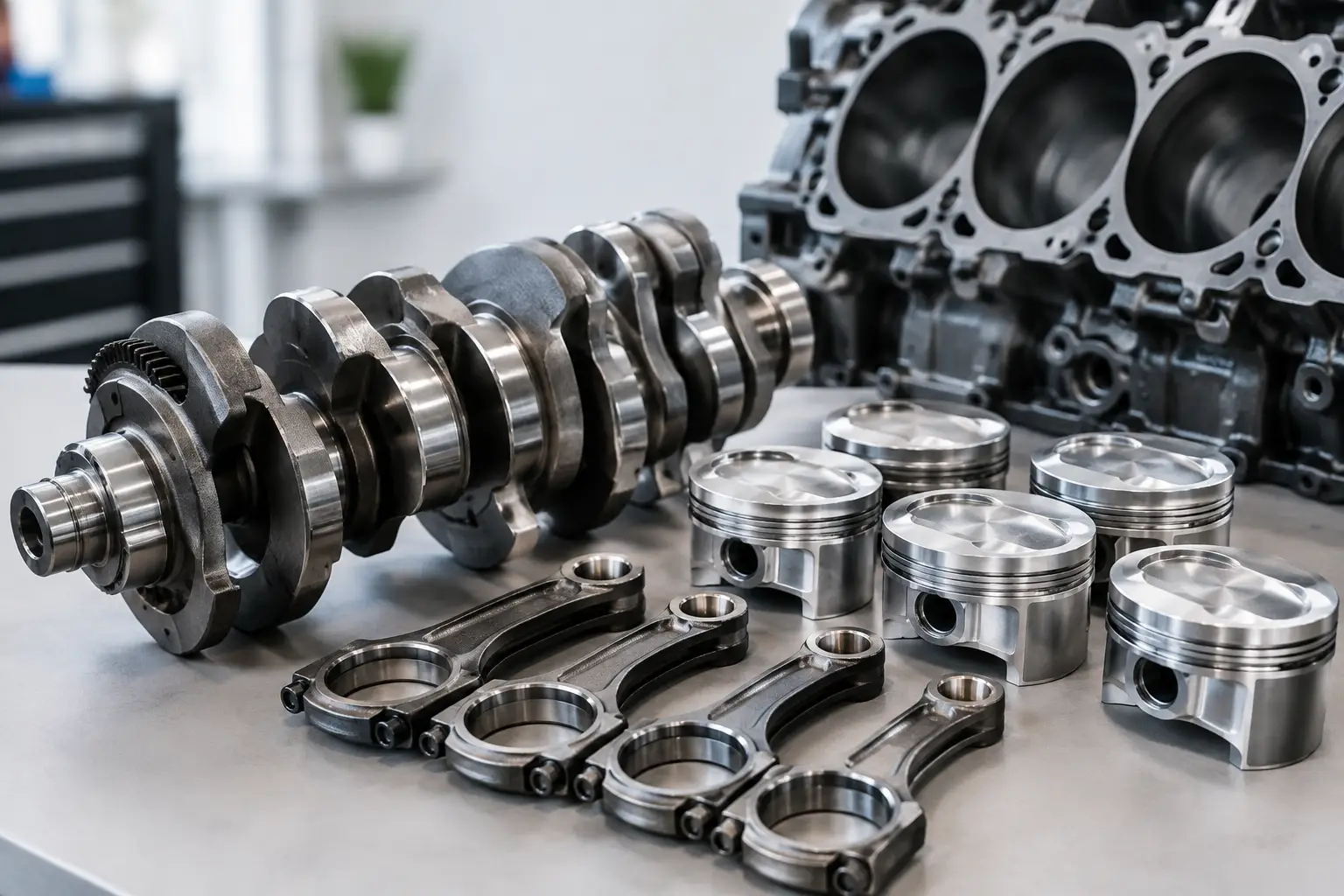
The term forged internals usually refers to forged pistons and connecting rods, with upgraded wrist pins, rod bolts, and bearings commonly specified as part of the same engine build. These components are produced from material that is shaped under extreme pressure rather than cast into a final form. The result is a denser, stronger grain structure that better tolerates the severe loading seen in a high-output engine.
That added strength matters most when combustion pressure rises. More boost, more ignition timing, more airflow, and more torque all increase the force applied to the piston, connecting rod, crankshaft, bearings, head gasket, and block. At a certain point, the factory safety margin disappears. A tune may produce the number on the dyno, but the engine’s long-term durability becomes the question.
Forged parts give an experienced builder more room to set the engine up for that environment. They do not make an engine indestructible. Poor calibration, lean fueling, excessive intake air temperatures, improper clearances, or detonation can damage premium hardware just as quickly as stock components.
Forged Pistons vs. Forged Rods
Pistons and rods face different failure modes, which is why selecting a forged rotating assembly should never be treated as a one-size-fits-all purchase.
Forged pistons manage heat and cylinder pressure
A forged piston is typically selected for higher boost, elevated exhaust gas temperature, aggressive fuel blends, or sustained abuse. Quality performance pistons can offer stronger ring lands, more suitable alloy selection, improved skirt profiles, and compression ratios tailored to the intended turbo and fuel system.
Ring land strength is especially relevant on direct-injection turbo engines. Detonation and excessive cylinder pressure often damage the upper ring land first. A stronger piston helps, but the tune still needs sufficient fuel volume, controlled timing, and proper knock management.
Piston selection also affects compression ratio. Lowering compression can create more room for boost on some combinations, but it may reduce off-boost response and change spool characteristics. Higher compression can improve response and efficiency, yet it leaves less margin for poor fuel or aggressive timing. The correct ratio depends on the turbocharger, available fuel, intended boost range, and tuner’s calibration approach.
Forged rods resist bending and tensile load
Connecting rods convert combustion force into crankshaft rotation, and they live through both compression and tension cycles at high rpm. Torque is often the primary concern because peak cylinder pressure loads the rod heavily. High engine speed adds another demand as the rod changes direction thousands of times per minute.
For big-turbo BMW, Audi, and Volkswagen builds, rods are commonly upgraded when the goal moves beyond a proven stock-rod threshold. The exact threshold is platform-specific. It can also vary substantially based on torque delivery. A setup that makes a hard midrange torque spike may be tougher on rods than one that builds power progressively at higher rpm, even if both show similar peak horsepower.
Rod design, fastener quality, bearing clearance, and machine work all matter. An expensive set of rods paired with incorrect bolt torque or an improperly measured crankshaft journal is not a reliable combination.
When Does a Build Need Forged Internals?
There is no universal horsepower number where every engine needs to be opened. Some factory engines have strong rods but pistons that become the weak link. Others have durable pistons but limited rod capacity. Closed-deck and open-deck block design, factory bore coating, crankshaft strength, and oiling system capacity all influence the answer.
Forged internals deserve serious consideration when the build includes a large-frame turbocharger, ethanol-based fuel at high boost, race fuel, nitrous, repeated drag-strip launches, extended road-course sessions, or a power target clearly beyond the platform’s established stock-bottom-end range. They also make sense when rebuilding an engine that has already suffered piston, ring land, or rod damage. If the engine is out and the budget supports the work, building for the next power level can be smarter than reinstalling parts that limit the future plan.
They may not be necessary for every tuned daily driver. If a vehicle has a conservative tune, stock turbocharger, modest torque target, and reliable fuel supply, putting the budget into cooling, fueling, maintenance, tires, brakes, and calibration may deliver better real-world results. The fastest-looking parts list is not always the best-performing build.
The Parts Around the Rotating Assembly Matter
A forged bottom end is only as capable as the supporting system around it. High-output European turbo engines need a complete plan, not just stronger pistons and rods.
Fueling must maintain commanded pressure and volume at full load. Depending on the platform and target, that can mean upgraded low-pressure fuel delivery, high-pressure fuel pump capacity, injectors, port injection, and ethanol content monitoring. A fuel system that falls short at the top of a pull can turn a quality engine build into a costly failure.
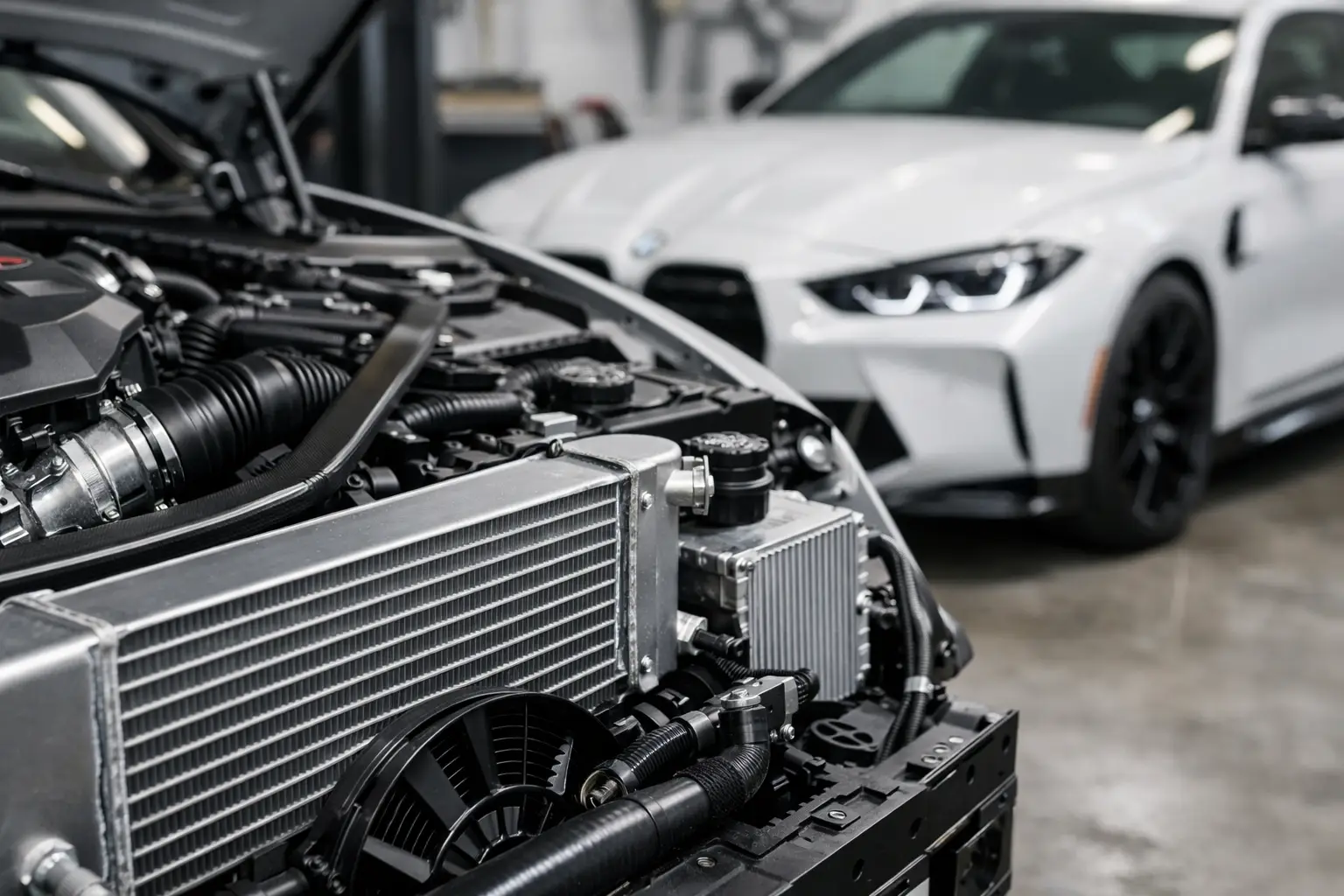
Cooling is equally critical. Intercooler efficiency, oil temperature control, radiator capacity, charge-air temperature, and crankcase ventilation all affect consistency. Heat-soaked intake air can increase knock sensitivity. High oil temperature reduces the margin for bearings and turbocharger components. Track cars need particular attention because lap-after-lap heat is not comparable to one short street pull.
The calibration has to match the hardware. A tuner needs accurate information on displacement, compression ratio, cams, turbo system, injectors, fuel type, and sensor configuration. Running a generic file after changing major engine components is not a serious solution.
Machine Work Is Not the Place to Cut Corners
The difference between a dependable forged engine and an expensive problem is frequently found at the machine shop. Cylinder bore condition, honing method, piston-to-wall clearance, ring end gap, deck flatness, bearing clearance, and rotating assembly balance must all be measured for the exact components being used.
Forged aluminum pistons often require different clearances than factory cast pistons. That can mean more cold-start noise in some applications, particularly with certain alloys and aggressive clearance targets. This is a normal trade-off in a performance engine, but it should be understood before the build begins. A quieter engine is not automatically stronger, and a louder cold piston is not automatically a problem.
Builders should also confirm whether the block needs sleeves, whether the cylinder walls can support the desired bore, and whether the factory head fasteners and head gasket are appropriate for the planned cylinder pressure. The block, head, and clamping system must work together.
Build for the Actual Goal
Before ordering forged internals, define the end state. Is the vehicle a 600-wheel-horsepower weekend car on pump gas and ethanol blend? An 800-plus-horsepower street build? A dedicated drag car with launch control and slicks? Or a road-course machine that sees sustained oil temperature and high rpm?
Those answers determine the piston specification, rod choice, compression ratio, ring package, bearings, fasteners, fuel system, turbocharger, and cooling requirements. They also determine whether a stock crankshaft remains suitable or whether the project needs a more extensive bottom-end solution.
At EAS Store, part selection starts with platform fitment and the power level you intend to keep, not just the highest number advertised on a product page. A properly matched forged engine package protects the investment in the rest of the car.
The best time to choose forged internals is before the tune, turbo, and fuel system force the issue. Build with a realistic target, leave margin for heat and fuel quality, and give the engine the supporting hardware it needs to earn every horsepower.